


PRODUCTS
PRODUCTS

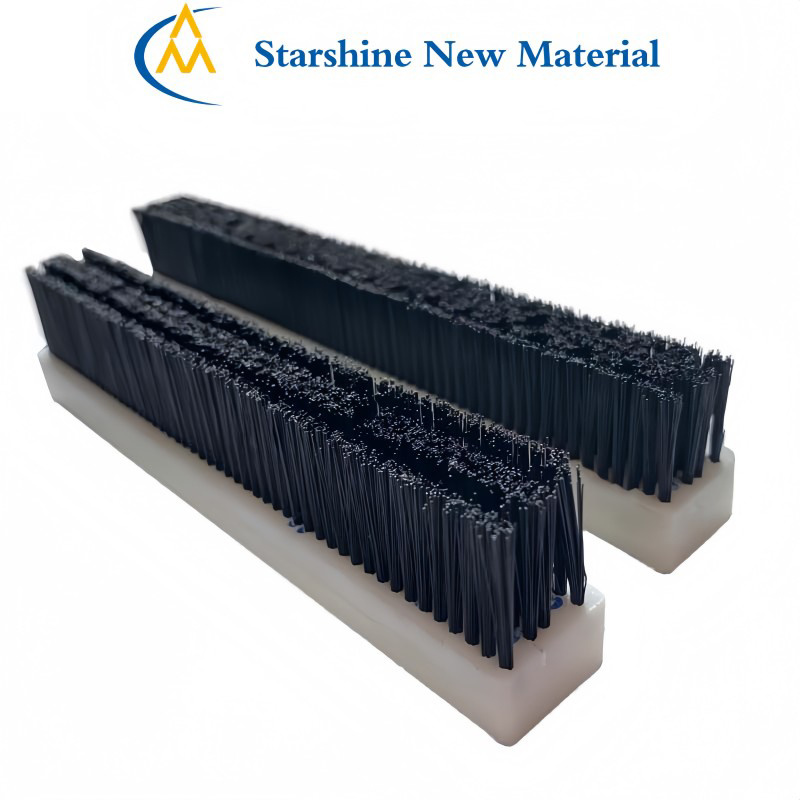
Abrasive Grinding Wire Wheel Brush
Abrasive Wire Wheel & Abrasive Grinding Wire Wheel Brush: Core Grinding Tools for Wood Processing
Abrasive wire wheels and abrasive grinding wire wheel brushes form a key grinding tool combination in the wood processing field. They focus on the core needs of "rough grinding & shaping" and "fine finishing" respectively. Custom-developed for the different characteristics of hard woods (rosewood, sandalwood), soft woods (pine, fir) and engineered wood, these tools feature the core advantages of "precise wood adaptation and efficient texture protection". Covering the critical link from raw material rough processing to fine finishing transition, they have become essential tools for wood carving, furniture manufacturing and woodworking.
I. Core Product Features: Complementary Grinding Tools
Through abrasive grit grading, filament planting optimization and brush head customization, the two tools form a "rough grinding-fine finishing" functional connection. They adapt to different stages of wood processing respectively, ensuring both processing efficiency and maximum preservation of the natural wood texture.
1. Abrasive Wire Wheel: Rough Grinding & Shaping, Core Tool for Hard Wood Processing
Focused on rough grinding and contour shaping of wood raw materials, it features "high-hardness abrasives + high-strength filaments" as its technical highlights. Specifically addressing the pain points of traditional tools such as "slow scar removal and difficult shaping" for hard woods, it is the preferred rough grinding tool for processing hard woods like rosewood root carvings and sandalwood ornaments.
- Abrasives & Materials: Adopts a composite structure of "silicon carbide/aluminum oxide abrasives implanted in PA66 nylon filaments", with abrasive grits covering the 40#-120# range to meet different rough grinding needs—40#-60# for rough grinding to remove bark, scars and contour shaping of large root carvings; 80#-120# for rough finishing of curved surfaces and removal of processing burrs on cast wood blanks. The filament diameter reaches 0.4-1.0mm with a Shore hardness of D60-D80, and its cutting force is 50% higher than that of ordinary nylon filaments. It does not slip easily when grinding high-density woods such as rosewood and sandalwood, ensuring efficient cutting.
- Structural Design: Adopts a wheel-shaped brush head design with a diameter of 80-200mm and thickness of 15-40mm, suitable for workpieces of different sizes; the center is equipped with a 45# steel reinforced shaft sleeve, supporting φ16/φ20 standard interfaces, which can be directly installed on common equipment such as angle grinders and sanders, with a speed adaptation range of 1000-3000 rpm. The brush head adopts a "dense filament planting" process with a density of 1200-1500 filaments/cm², ensuring uniform force on the hard wood surface and avoiding local grinding depression.
- Core Advantages: Outstanding durability—each wheel can continuously rough grind 30-50 rosewood root blanks, with uniform wear of abrasive filaments, reducing replacement frequency by 40% compared with ordinary grinding wheels; it can be operated along the natural grain direction of hard wood during grinding, reducing wood fiber tearing and laying a good foundation for subsequent fine finishing.
2. Abrasive Grinding Wire Wheel Brush: Universal Fine Finishing, Tool for All Wood Types
As the "core transition tool between rough grinding and polishing", it features "medium-fine grit abrasives + flexible brush head" as its core characteristics. It can adapt to the fine finishing needs of hard woods, soft woods and engineered wood. Its main function is to remove scratches left by rough grinding while completely preserving the natural wood texture, making it the most widely used universal grinding tool in woodworking.
- Abrasives & Materials: Uses "aluminum oxide + silicon carbide mixed abrasives" with a grit range of 120#-400# for precise adaptation—120#-240# for fine finishing of soft woods such as pine and fir to avoid fiber fuzzing; 320#-400# for finishing hard woods like rosewood, ebony and engineered wood to accurately remove fine scratches. The filaments are made of high-strength nylon and wool composite material with a diameter of 0.2-0.5mm and Shore hardness of D35-D50. It makes flexible contact with the wood surface, effectively avoiding new scratches during finishing.
- Structural Design: Provides three brush head types—"wheel-shaped, cup-shaped and cylindrical" to meet multi-scenario processing needs—wheel-shaped brush heads (diameter 50-150mm) for flat surface grinding; cup-shaped brush heads (diameter 30-80mm) for curved and concave structures; cylindrical brush heads (diameter 15-50mm) for hole and gap cleaning. The handle has anti-slip patterns, supporting manual operation or adaptation to small electric drills to flexibly respond to different processing scenarios.
- Core Technology: Adopts dual technologies of "CNC filament planting + epoxy resin sealing",
- Commodity name: Abrasive Grinding Wire Wheel Brush
- Description
-
Abrasive Wire Wheel & Abrasive Grinding Wire Wheel Brush: Core Grinding Tools for Wood Processing
Abrasive wire wheels and abrasive grinding wire wheel brushes form a key grinding tool combination in the wood processing field. They focus on the core needs of "rough grinding & shaping" and "fine finishing" respectively. Custom-developed for the different characteristics of hard woods (rosewood, sandalwood), soft woods (pine, fir) and engineered wood, these tools feature the core advantages of "precise wood adaptation and efficient texture protection". Covering the critical link from raw material rough processing to fine finishing transition, they have become essential tools for wood carving, furniture manufacturing and woodworking.I. Core Product Features: Complementary Grinding Tools
Through abrasive grit grading, filament planting optimization and brush head customization, the two tools form a "rough grinding-fine finishing" functional connection. They adapt to different stages of wood processing respectively, ensuring both processing efficiency and maximum preservation of the natural wood texture.1. Abrasive Wire Wheel: Rough Grinding & Shaping, Core Tool for Hard Wood Processing
Focused on rough grinding and contour shaping of wood raw materials, it features "high-hardness abrasives + high-strength filaments" as its technical highlights. Specifically addressing the pain points of traditional tools such as "slow scar removal and difficult shaping" for hard woods, it is the preferred rough grinding tool for processing hard woods like rosewood root carvings and sandalwood ornaments.Abrasives & Materials: Adopts a composite structure of "silicon carbide/aluminum oxide abrasives implanted in PA66 nylon filaments", with abrasive grits covering the 40#-120# range to meet different rough grinding needs—40#-60# for rough grinding to remove bark, scars and contour shaping of large root carvings; 80#-120# for rough finishing of curved surfaces and removal of processing burrs on cast wood blanks. The filament diameter reaches 0.4-1.0mm with a Shore hardness of D60-D80, and its cutting force is 50% higher than that of ordinary nylon filaments. It does not slip easily when grinding high-density woods such as rosewood and sandalwood, ensuring efficient cutting.Structural Design: Adopts a wheel-shaped brush head design with a diameter of 80-200mm and thickness of 15-40mm, suitable for workpieces of different sizes; the center is equipped with a 45# steel reinforced shaft sleeve, supporting φ16/φ20 standard interfaces, which can be directly installed on common equipment such as angle grinders and sanders, with a speed adaptation range of 1000-3000 rpm. The brush head adopts a "dense filament planting" process with a density of 1200-1500 filaments/cm², ensuring uniform force on the hard wood surface and avoiding local grinding depression.Core Advantages: Outstanding durability—each wheel can continuously rough grind 30-50 rosewood root blanks, with uniform wear of abrasive filaments, reducing replacement frequency by 40% compared with ordinary grinding wheels; it can be operated along the natural grain direction of hard wood during grinding, reducing wood fiber tearing and laying a good foundation for subsequent fine finishing.2. Abrasive Grinding Wire Wheel Brush: Universal Fine Finishing, Tool for All Wood Types
As the "core transition tool between rough grinding and polishing", it features "medium-fine grit abrasives + flexible brush head" as its core characteristics. It can adapt to the fine finishing needs of hard woods, soft woods and engineered wood. Its main function is to remove scratches left by rough grinding while completely preserving the natural wood texture, making it the most widely used universal grinding tool in woodworking.Abrasives & Materials: Uses "aluminum oxide + silicon carbide mixed abrasives" with a grit range of 120#-400# for precise adaptation—120#-240# for fine finishing of soft woods such as pine and fir to avoid fiber fuzzing; 320#-400# for finishing hard woods like rosewood, ebony and engineered wood to accurately remove fine scratches. The filaments are made of high-strength nylon and wool composite material with a diameter of 0.2-0.5mm and Shore hardness of D35-D50. It makes flexible contact with the wood surface, effectively avoiding new scratches during finishing.Structural Design: Provides three brush head types—"wheel-shaped, cup-shaped and cylindrical" to meet multi-scenario processing needs—wheel-shaped brush heads (diameter 50-150mm) for flat surface grinding; cup-shaped brush heads (diameter 30-80mm) for curved and concave structures; cylindrical brush heads (diameter 15-50mm) for hole and gap cleaning. The handle has anti-slip patterns, supporting manual operation or adaptation to small electric drills to flexibly respond to different processing scenarios.Core Technology: Adopts dual technologies of "CNC filament planting + epoxy resin sealing", with an abrasive filament shedding rate ≤ 0.03% per 50 hours of use, ensuring clean processing; the radial runout error of the brush head is ≤ 0.05mm, which can ensure flat surfaces of precision workpieces such as engineered wood furniture panels after grinding without height differences.II. Core Application Scenarios: Covering Diverse Wood Processing Needs
With their complementary functions, abrasive wire wheels and abrasive grinding wire wheel brushes are well-adapted to diverse scenarios such as hard wood processing, soft wood treatment, engineered wood finishing and old wood renovation, forming a complete "rough grinding-fine finishing" processing chain.1. Hard Wood Processing Scenarios (Rosewood, Sandalwood, Ebony)
Hard woods have high density and fine texture, so processing needs to balance "efficient cutting" and "texture protection", and the two tools cooperate perfectly:Raw Material Rough Grinding Stage: Use a 40#-60# abrasive wire wheel with an angle grinder to quickly remove bark, scars and processing burrs from rosewood root blanks. Operate along the grain direction during grinding to avoid fiber tearing; for the renovation of old rosewood furniture, the abrasive wire wheel can be used to initially clean stubborn surface stains to lay the foundation for subsequent processing.Fine Finishing Stage: Switch to a 240#-320# abrasive grinding wire wheel brush to finish rosewood furniture panels, accurately removing scratches left by rough grinding and making natural textures of hard woods such as "ghost grains" and "water ripples" clearer; for rosewood relief works, cup-shaped abrasive grinding wire wheel brushes can be used to grind curved surfaces, and pointed brush heads to clean pattern gaps, ensuring smooth edges of the grain without burrs.2. Soft Wood Processing Scenarios (Pine, Fir, Poplar)
Soft woods have loose fibers and are prone to fuzzing, so processing needs to focus on "flexible grinding". The abrasive grinding wire wheel brush becomes the core tool, while the abrasive wire wheel assists in light rough grinding:Mass Processing Scenario: During batch processing of pine boards, first use an 80#-120# abrasive wire wheel for light rough grinding to remove surface burrs, then switch to a 120#-240# abrasive grinding wire wheel brush for fine finishing to ensure flat and non-fuzzy board surfaces; for fiber protrusions at the joints of fir wardrobe boards, cylindrical abrasive grinding wire wheel brushes can be used for precise cleaning to improve joint tightness.DIY Creation Scenario: In the processing of soft wood handmade ornaments, the abrasive wire wheel can be used for initial shaping to remove excess parts of raw materials; then a 320#-400# abrasive grinding wire wheel brush is used for manual fine finishing. The flexible filaments avoid surface fuzzing, preparing for subsequent polishing.3. Engineered Wood & Special Wood Processing Scenarios
Engineered wood is prone to edge chipping, and special woods (such as old wood and carbonized wood) require targeted processing. The two tools can be accurately adapted:Engineered Wood Processing: In the processing of engineered woods such as MDF, particleboard and laminate flooring, use an 80#-120# abrasive wire wheel for light rough grinding to avoid edge chipping caused by excessive force; then use a 320#-400# abrasive grinding wire wheel brush for finishing to ensure a flat surface, laying the foundation for subsequent coating; for burrs around the holes of particleboards, micro cylindrical abrasive grinding wire wheel brushes can be used for cleaning to ensure firm installation of hardware.Old Wood Renovation Scenario: When renovating old wood such as old elm, first use an abrasive wire wheel to remove the surface decayed wood layer, then use a 180#-240# abrasive grinding wire wheel brush for finishing to preserve the natural texture and age marks of the old wood; for fuzz around the wormholes of old wood, the abrasive grinding wire wheel brush can be used for fine cleaning to prepare for filling and restoration.III. Selection & Usage Precautions
1. Scientific Selection Guide
Selection by Processing Stage: Choose abrasive wire wheels for raw material rough grinding, shaping and scar removal—40#-60# for heavy rough grinding, 80#-120# for light rough grinding; choose abrasive grinding wire wheel brushes for fine finishing, scratch removal and texture highlighting—120#-240# for soft woods, 320#-400# for hard woods and engineered wood.Selection by Workpiece Shape: Prioritize wheel-shaped brush heads for flat workpieces; cup-shaped brush heads for curved and concave structures; cylindrical brush heads for holes, gaps and joints; handheld abrasive grinding wire wheel brushes for small precision workpieces to facilitate accurate operation.2. Usage Precautions
When using the abrasive wire wheel, match the equipment speed (1000-3000 rpm) to avoid brush head runout caused by high-speed rotation; when the abrasive grinding wire wheel brush is adapted to small electric drills, the speed is recommended to be controlled at 500-1500 rpm to ensure precise grinding.Operate along the grain direction when grinding hard woods; slight cross grinding is allowed for soft woods but with reduced force; do not apply excessive force when processing engineered wood to prevent edge chipping or delamination.Regularly check the wear of the brush head. Replace the abrasive wire wheel when the filaments become sparse and the abrasive grinding wire wheel brush when its scratch repair ability decreases, to ensure processing quality.
Message
Please provide the following valid information, and we will contact you as soon as possible.
Mobile:
Wechat/Whatsapp:
E-mail:
Address:
No. 123 Yuantan Avenue, Yuantan Town, Anqing City, Anhui Province, China


Online Message
If you have any product related questions, please feel free to contact us!
Copyright © 2025 Starshine New Materials Technology Co., Ltd.
Business License