


PRODUCTS
PRODUCTS

Specialized Deburring Brush Series for Automotive Components
Specialized Deburring Brush Series for Automotive Components: Efficient and Precise Burr Removal Solutions
Automotive component deburring brushes, high-efficiency AO abrasive disc brushes for deburring, and epoxy-encapsulated Ha'er end face brushes form a set of specialized tools developed to address the pain points in automotive manufacturing—such as difficult burr removal, high precision requirements, and low mass production efficiency—for core components like engines, chassis, and vehicle bodies. With "automotive working condition-customized abrasives + structurally reinforced design" as its technical core, this series leverages differentiated characteristics including flexible deburring, high grinding efficiency, and precise end face processing. It caters to the processing needs of automotive components with different shapes, such as complex curved surfaces, large-area flat surfaces, and precision end faces, achieving the core goals of "burr removal rate ≥ 98%, no workpiece scratches, and adaptability to automated production lines". It has become a key auxiliary tool for ensuring product precision and assembly performance throughout the entire automotive component manufacturing process.
I. Core Product Features: Automotive-Specific Optimization of Abrasives and Structure
All three types of brushes are designed based on the adaptability to common automotive component materials (aluminum alloy, carbon steel, stainless steel, die-cast aluminum). Through targeted design of abrasive selection, filament planting technology, and matrix structure, they form product advantages of "focused functionality and stable performance", meeting the full-process needs from rough deburring to finishing.
1. Automotive Component Deburring Brush: Flexible Adaptation for Dead-Angle-Free Cleaning on Complex Curved Surfaces
Specifically designed for the irregular structures of automotive components, it focuses on "flexible fitting + directional deburring", solving the problems of "incomplete cleaning and easy scratching" of traditional tools on complex structures such as curved surfaces, holes, and tooth grooves. It is the preferred tool for precision parts like engine blocks and gearbox gears.
- Abrasives and Materials: Adopts "PA66 nylon filaments + silicon carbide/aluminum oxide abrasive implantation" with abrasive grit sizes selectable in the range of 80#-400#—80#-120# for rough grinding to remove large burrs, and 240#-400# for finishing to remove flash. The filament diameter ranges from 0.2 to 0.8mm with a Shore hardness of D50-D70, combining rigidity and a rebound rate (≥90%). It avoids hard contact damage when fitting irregular structures such as crankshaft connecting rod curved surfaces and intake manifold inner cavities.
- Structural Design: Covers three core shapes—"strip, bowl, and T-shape". Strip brushes (brush surface width 10-50mm) are equipped with non-slip handles for manual cleaning of gear tooth grooves and radiator core gaps; bowl-shaped brushes (diameter 50-150mm) are compatible with angle grinders for processing wheel hub inner sides and brake caliper curved surfaces; T-shaped brushes (brush head diameter 3-15mm) reach narrow spaces such as engine block oil passages and valve guide holes, with 360° rotatable brush heads for dead-angle-free burr removal.
- Core Technology: Adopts "mechanical filament planting + high-temperature adhesive sealing" technology, increasing filament planting firmness by 70% with an abrasive filament shedding rate ≤ 0.05% per 1000 workpieces processed. The brush head radial runout error is ≤ 0.1mm, ensuring uniform force on precision surfaces such as gear tooth surfaces and engine block end faces, with a post-processing surface roughness of up to Ra1.6μm.
2. High-Efficiency AO Abrasive Disc Brush for Deburring: High Grinding Efficiency, Main Force in Mass Production
"AO" abrasive specifically refers to high-purity aluminum oxide (Al₂O₃) abrasive, which features "high grinding efficiency and long service life". Combined with its disc structure for compatibility with automated production lines, it is a core tool for mass deburring of large-area automotive parts such as brake discs, wheel hubs, and body sheet metal parts, with a processing efficiency 4-6 times that of ordinary nylon brushes.
- Abrasives and Materials: Core adopts 99% high-purity AO abrasive with grit sizes of 40#-200# and abrasive hardness of HV1800-HV2200, providing strong cutting force for casting/forging burrs on automotive components (such as brake disc riser burrs and wheel hub die-casting flash). The base filaments are high-strength polyester filaments, temperature-resistant up to 180℃, compatible with high-speed rotation of automated equipment (1000-3000 rpm).
- Structural Design: Disc diameter ranges from 100-300mm, thickness from 15-50mm. The center uses a 45# steel reinforced matrix with standard ISO interfaces (φ16/φ20), which can be directly adapted to robotic arms and CNC deburring machines. The
- Commodity name: Specialized Deburring Brush Series for Automotive Components
- Description
-
Specialized Deburring Brush Series for Automotive Components: Efficient and Precise Burr Removal Solutions
Automotive component deburring brushes, high-efficiency AO abrasive disc brushes for deburring, and epoxy-encapsulated Ha'er end face brushes form a set of specialized tools developed to address the pain points in automotive manufacturing—such as difficult burr removal, high precision requirements, and low mass production efficiency—for core components like engines, chassis, and vehicle bodies. With "automotive working condition-customized abrasives + structurally reinforced design" as its technical core, this series leverages differentiated characteristics including flexible deburring, high grinding efficiency, and precise end face processing. It caters to the processing needs of automotive components with different shapes, such as complex curved surfaces, large-area flat surfaces, and precision end faces, achieving the core goals of "burr removal rate ≥ 98%, no workpiece scratches, and adaptability to automated production lines". It has become a key auxiliary tool for ensuring product precision and assembly performance throughout the entire automotive component manufacturing process.I. Core Product Features: Automotive-Specific Optimization of Abrasives and Structure
All three types of brushes are designed based on the adaptability to common automotive component materials (aluminum alloy, carbon steel, stainless steel, die-cast aluminum). Through targeted design of abrasive selection, filament planting technology, and matrix structure, they form product advantages of "focused functionality and stable performance", meeting the full-process needs from rough deburring to finishing.1. Automotive Component Deburring Brush: Flexible Adaptation for Dead-Angle-Free Cleaning on Complex Curved Surfaces
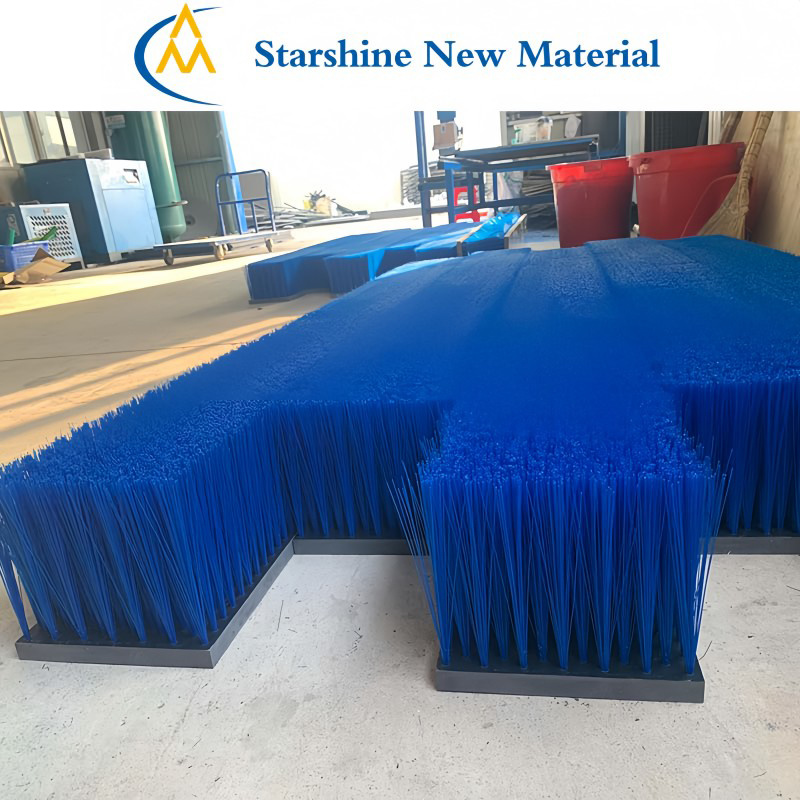
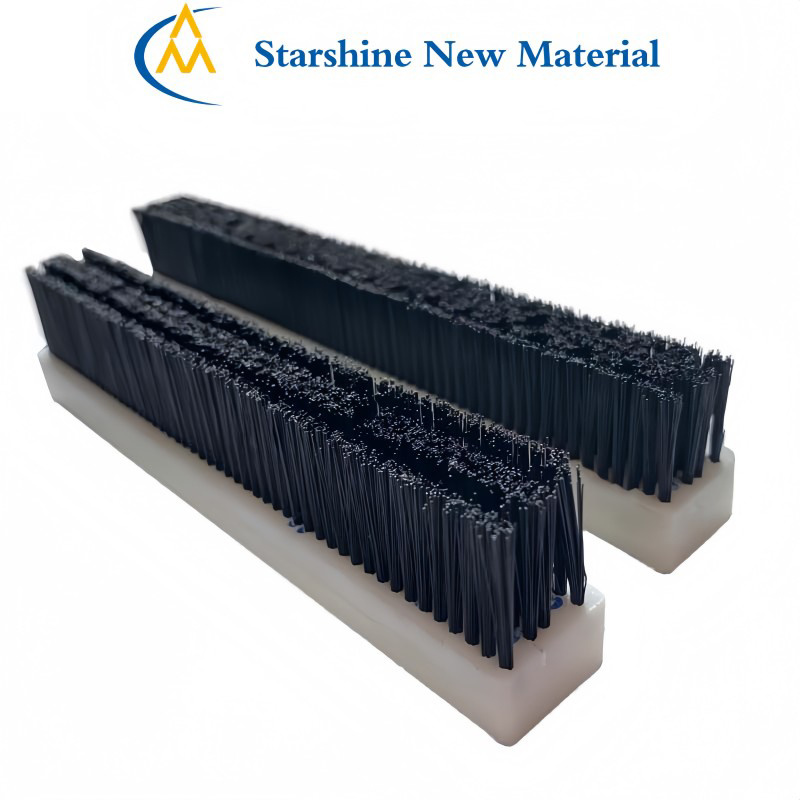
Specifically designed for the irregular structures of automotive components, it focuses on "flexible fitting + directional deburring", solving the problems of "incomplete cleaning and easy scratching" of traditional tools on complex structures such as curved surfaces, holes, and tooth grooves. It is the preferred tool for precision parts like engine blocks and gearbox gears.Abrasives and Materials: Adopts "PA66 nylon filaments + silicon carbide/aluminum oxide abrasive implantation" with abrasive grit sizes selectable in the range of 80#-400#—80#-120# for rough grinding to remove large burrs, and 240#-400# for finishing to remove flash. The filament diameter ranges from 0.2 to 0.8mm with a Shore hardness of D50-D70, combining rigidity and a rebound rate (≥90%). It avoids hard contact damage when fitting irregular structures such as crankshaft connecting rod curved surfaces and intake manifold inner cavities.Structural Design: Covers three core shapes—"strip, bowl, and T-shape". Strip brushes (brush surface width 10-50mm) are equipped with non-slip handles for manual cleaning of gear tooth grooves and radiator core gaps; bowl-shaped brushes (diameter 50-150mm) are compatible with angle grinders for processing wheel hub inner sides and brake caliper curved surfaces; T-shaped brushes (brush head diameter 3-15mm) reach narrow spaces such as engine block oil passages and valve guide holes, with 360° rotatable brush heads for dead-angle-free burr removal.Core Technology: Adopts "mechanical filament planting + high-temperature adhesive sealing" technology, increasing filament planting firmness by 70% with an abrasive filament shedding rate ≤ 0.05% per 1000 workpieces processed. The brush head radial runout error is ≤ 0.1mm, ensuring uniform force on precision surfaces such as gear tooth surfaces and engine block end faces, with a post-processing surface roughness of up to Ra1.6μm.2. High-Efficiency AO Abrasive Disc Brush for Deburring: High Grinding Efficiency, Main Force in Mass Production
"AO" abrasive specifically refers to high-purity aluminum oxide (Al₂O₃) abrasive, which features "high grinding efficiency and long service life". Combined with its disc structure for compatibility with automated production lines, it is a core tool for mass deburring of large-area automotive parts such as brake discs, wheel hubs, and body sheet metal parts, with a processing efficiency 4-6 times that of ordinary nylon brushes.Abrasives and Materials: Core adopts 99% high-purity AO abrasive with grit sizes of 40#-200# and abrasive hardness of HV1800-HV2200, providing strong cutting force for casting/forging burrs on automotive components (such as brake disc riser burrs and wheel hub die-casting flash). The base filaments are high-strength polyester filaments, temperature-resistant up to 180℃, compatible with high-speed rotation of automated equipment (1000-3000 rpm).Structural Design: Disc diameter ranges from 100-300mm, thickness from 15-50mm. The center uses a 45# steel reinforced matrix with standard ISO interfaces (φ16/φ20), which can be directly adapted to robotic arms and CNC deburring machines. The brush surface adopts a "helical filament planting" arrangement with a grinding trajectory overlap rate ≥ 85%, avoiding processing marks on flat surfaces such as brake discs and flywheels, and ensuring a surface flatness ≤ 0.02mm/100mm.Core Advantages: A single disc can continuously process 5000-8000 automotive wheel hubs. AO abrasive has good self-sharpening performance and maintains stable grinding force even after wear. For welding burrs on carbon steel body frames, it can be used with a high-pressure air gun for simultaneous cleaning, achieving a burr removal rate of 99% without the need for rework.3. Epoxy-Encapsulated Ha'er End Face Brush: Precise Positioning for Specialized Precision End Face Processing
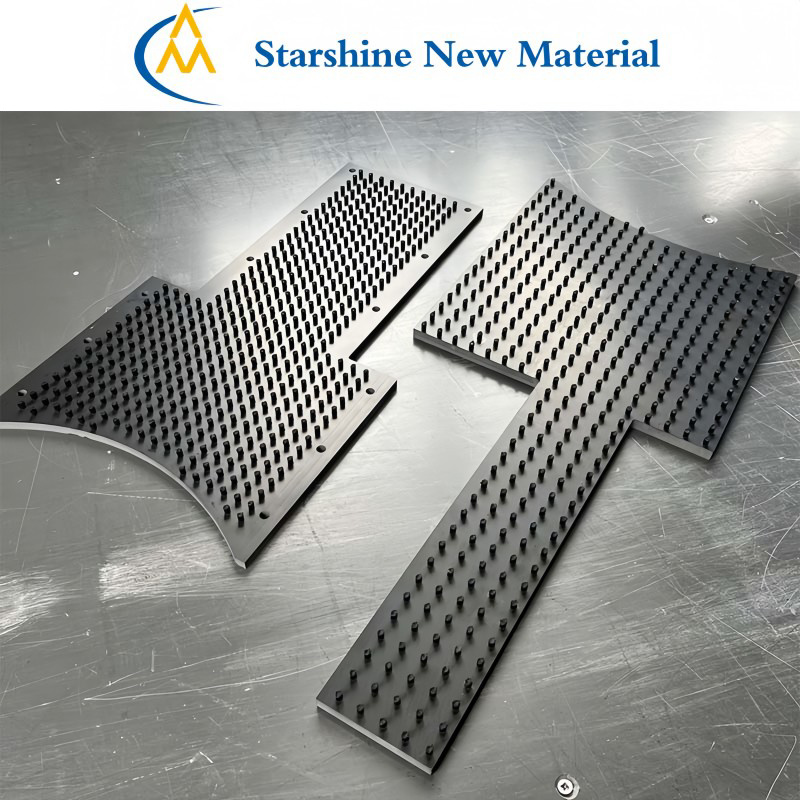
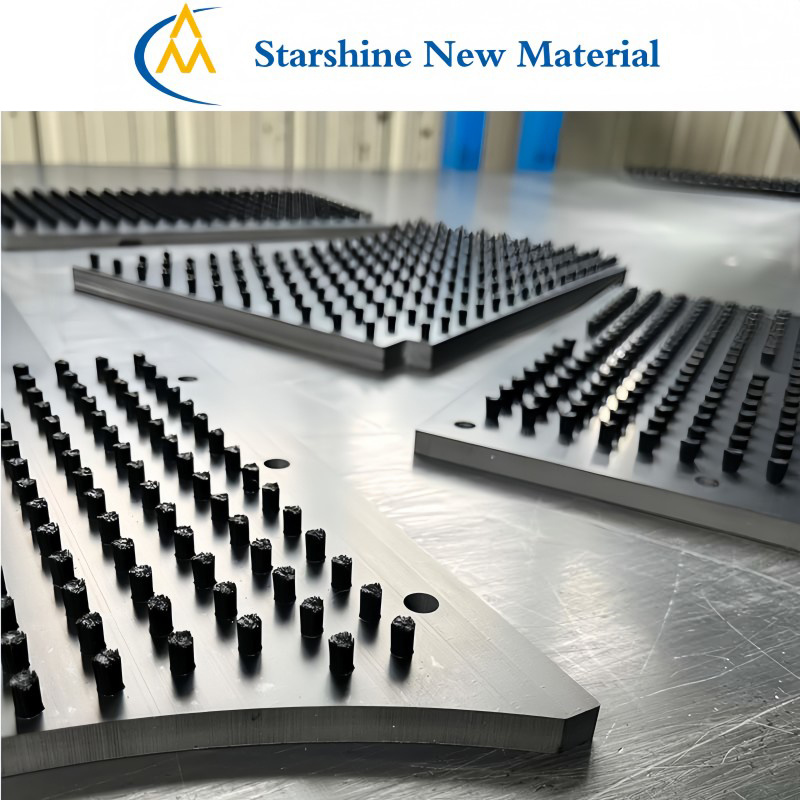
"Epoxy-encapsulated" refers to the overall epoxy resin sealing for fixing abrasive filaments, while "Ha'er end face" specifically denotes the specialized design for component end faces and step faces. It is precisely adapted to burr removal on precision end faces of automotive components such as gearbox housings, differential housings, and engine cylinder heads, ensuring end face flatness and sealing performance.Abrasives and Materials: Abrasives adopt "AO abrasive + silicon carbide mixed abrasive" with grit sizes of 120#-320#, achieving dual effects of "precise cutting + surface finishing" for milling burrs on aluminum alloy cylinder heads and drilling burrs on cast iron gearbox housings. The abrasive filament diameter is 0.3-0.6mm, and the brush head rigidity is increased by 40% after epoxy encapsulation, ensuring no deflection during end face processing.Structural Design: Brush heads are available in "annular/square" shapes to adapt to different end face profiles. The perpendicularity accuracy between the brush surface and matrix is ≤ 0.01mm. The matrix is made of aviation aluminum alloy with a lightweight design (weight ≤ 500g) for compatibility with small CNC equipment. The brush body edge is equipped with a positioning ring that automatically aligns with the component end face during processing, ensuring no residual burrs around bolt holes and oil passage holes.Core Technology: Epoxy resin vacuum encapsulation technology prevents abrasive filament loosening, resists oil and cutting fluid corrosion, and enables continuous use in wet processing environments. The brush surface undergoes precision grinding with a flatness ≤ 0.03mm, and the residual burrs in the cylinder head end face sealing groove after processing are ≤ 0.01mm, meeting the engine sealing performance requirements.II. Core Application Scenarios: Covering the Entire Automotive Component Manufacturing Process
Relying on their differentiated advantages of "flexibility, efficiency, and precision", the three types of brushes have deeply penetrated the processing links of core automotive components such as engines, chassis, vehicle bodies, and transmission systems, forming a complete solution from blank processing to finished product finishing.1. Engine System Components: Ensuring Sealing and Motion Precision
Burrs on engine components directly affect fuel efficiency and service life. The brush series enables comprehensive cleaning of "holes, end faces, and curved surfaces":Cylinder Block and Cylinder Head: Burrs on the valve seat ring and spark plug hole of aluminum alloy cylinder heads are cleaned with epoxy-encapsulated Ha'er end face brushes to ensure the flatness of the sealing groove; internal burrs in the oil and water passages of the cylinder block are deeply cleaned with T-shaped deburring brushes to avoid oil blockage; milling burrs on the cylinder block end face are finished with annular Ha'er end face brushes to ensure fitting tightness with the cylinder head.Crankshaft and Connecting Rod: Turning burrs on the crankshaft main journal and connecting rod journal are cleaned with bowl-shaped deburring brushes, where flexible abrasive filaments avoid scratching the precision surface of the journal; burrs in the big and small end holes of the connecting rod are cleaned with micro T-shaped brushes to ensure precise bearing assembly clearance.2. Transmission System Components: Improving Meshing and Transmission Efficiency
Burrs on transmission components such as gearboxes and differentials easily cause gear meshing jamming. The brush series specifically solves burr problems on "tooth surfaces, end faces, and threaded holes":Gearbox Housing and Gears: Burrs on the end face bolt holes and oil passage holes of cast iron gearbox housings are cleaned with square epoxy-encapsulated Ha'er end face brushes, where the positioning ring ensures no residue around the holes; burrs on the tooth surface and root of gearbox gears are manually finished with strip deburring brushes, and 240# abrasive filaments remove flash while protecting tooth surface precision; burrs on the conical surface of synchronizer rings are cleaned with bowl-shaped brushes to ensure smooth shifting.Differential Housing: Burrs on the flange end face of the differential housing are processed with annular Ha'er end face brushes to ensure the flatness of the connection with the drive shaft; casting burrs in the housing inner cavity are cleaned with deburring brushes combined with a high-pressure cleaning machine to prevent impurities from entering the gear meshing surface.3. Chassis and Brake System Components: Ensuring Safety and Durability
Chassis and brake components are directly related to driving safety. The brush series focuses on meeting the needs of "large-area deburring + surface flatness":Brake System: Casting riser burrs and end face scratches on brake discs are roughly ground and removed with high-efficiency AO abrasive disc brushes (40#-80#), followed by finishing with 120# disc brushes to ensure brake disc surface flatness; burrs in the brake caliper piston hole are cleaned with T-shaped deburring brushes to avoid affecting piston movement precision.Suspension System: Forging burrs on control arms and steering knuckles are mass-removed with AO disc brushes (80#) at an efficiency of 15 pieces per minute; burrs in the threaded holes of suspension ball joints are cleaned with small deburring brushes to ensure firm bolt connection.4. Body and Exterior Components: Improving Assembly and Aesthetics
Burrs on appearance-related components such as body sheet metal parts and wheel hubs affect assembly precision and visual effects. The brush series achieves "efficient deburring + surface beautification":Body Sheet Metal: Welding burrs on doors and frames are cleaned with AO disc brushes (120#) combined with robotic arms to avoid gaps during sheet metal assembly; punching burrs on body pillars are manually trimmed with strip deburring brushes to eliminate the risk of sharp edges scratching the interior.Wheel Hubs and Rims: Die-casting flash on aluminum alloy wheel hubs is roughly ground with AO disc brushes (80#), followed by finishing with 240# disc brushes to remove burrs while enhancing the matte texture of the hub surface; burrs in the rim valve holes are cleaned with micro T-shaped brushes to ensure the sealing of valve stem installation.III. Selection Guidelines and Summary of Core Advantages
1. Scientific Selection Guidelines: Adapting to Automotive Manufacturing Scenarios
Selection by Component Structure: For complex curved surfaces (crankshafts, intake manifolds), select automotive component deburring brushes (bowl/T-shape); for large-area flat surfaces (brake discs, wheel hubs), select high-efficiency AO abrasive disc brushes for deburring; for precision end faces (cylinder heads, gearbox housings), select epoxy-encapsulated Ha'er end face brushes.Selection by Burr Type and Material: For casting/forging rough burrs (carbon steel control arms, cast iron housings), select AO disc brushes (40#-80#); for milling/drilling fine burrs (aluminum alloy cylinder heads, gears), select deburring brushes (240#-400#) or Ha'er end face brushes (120#-320#); for soft burrs on aluminum/magnesium alloys, prioritize nylon-based abrasive brushes to avoid metal contamination.Selection by Production Mode: For automated mass production (wheel hubs, brake discs), select AO disc brushes (with standard equipment interfaces); for precision small-batch processing (engine cylinder heads, gearbox gears), select epoxy-encapsulated Ha'er end face brushes; for manual rework (after-sales maintenance, small parts), select handle-equipped deburring brushes.2. Core Competitive Advantages: Exclusive Value for Automotive Scenarios
Compared with general-purpose deburring tools, this series has three exclusive advantages for automotive scenarios: First, strong working condition adaptability—abrasives are precisely matched to common automotive materials (aluminum, steel, cast iron), and the structure fits the irregular features of components, solving the problems of "incomplete deburring and workpiece damage" of general tools. Second, balanced efficiency and precision—AO disc brushes adapt to automated production lines to improve mass processing efficiency, while Ha'er end face brushes ensure precision end face processing accuracy, meeting the "high-efficiency mass production + strict standards" requirements of automotive manufacturing. Third, outstanding durability—technologies such as epoxy encapsulation and high-temperature adhesive sealing extend tool life, and the single-disc processing capacity of AO abrasive is 3 times that of ordinary abrasives, reducing production consumable costs.With the upgraded precision requirements for components in new energy vehicles (such as motor housings and battery trays), this series of brushes will continue to adapt to the new lightweight and precision requirements of automotive manufacturing through abrasive upgrades (such as nano-coated AO abrasives) and structural innovations (such as quickly replaceable brush heads), becoming a standard tool for automotive component deburring.
Message
Please provide the following valid information, and we will contact you as soon as possible.
Mobile:
Wechat/Whatsapp:
E-mail:
Address:
No. 123 Yuantan Avenue, Yuantan Town, Anqing City, Anhui Province, China


Online Message
If you have any product related questions, please feel free to contact us!
Copyright © 2025 Starshine New Materials Technology Co., Ltd.
Business License