


PRODUCTS
PRODUCTS

Industrial-Grade Abrasive Brush Series
Industrial-Grade Abrasive Brush Series: Full-Process Solution from Deburring to Precision Polishing
Diamond Brushes, Tool Passivation Brushes, DuPont Nylon Wheel Brushes, Diamond Wire Tool Brushes, Deburring Brushes, Polishing Brushes, and Abrasive Brushes form a set of industrial surface treatment tools covering the entire process of "rough machining - semi-finishing - finishing". With the technical core of "abrasive carriers precisely matched to working conditions + optimized structural design", this series leverages the differentiated properties such as the high hardness of diamond, the flexibility of DuPont nylon, and the wear resistance of diamond wire. It provides an "efficient, low-damage, working condition-adapted, and stable-service-life" solution for the needs of "deburring, cutting edge passivation, surface polishing, and defect repair" of different workpieces such as precision tools, automotive components, and electronic parts. Addressing the pain points of traditional tools such as "poor targeting, easy workpiece damage, and low efficiency", it has become a core auxiliary tool in modern industrial manufacturing.
I. Core Product Features: Dual Guarantee of Abrasive Empowerment and Structural Customization
The competitiveness of this product series stems from the "precise matching between abrasive types and workpiece materials" and "in-depth adaptation between brush head structure and operation scenarios". Through abrasive grading, wire planting technology, and matrix optimization, each tool achieves focused functionality.
1. Core Support: Abrasive Grading and Process Advantages
Based on the workpiece hardness, surface precision, and operation intensity requirements, differentiated abrasives and precision manufacturing processes are adopted to build the core performance barrier of the tools:
- Classified Selection of Abrasive Types: Covering superhard abrasives (diamond grit size 80#-2000#, diamond wire diameter 0.1-0.8mm), polymer abrasives (DuPont nylon diameter 0.2-1.2mm, embedded with silicon carbide/aluminum oxide abrasives), and conventional abrasives (brown corundum/white corundum grit size 40#-800#). Diamond/diamond wire is suitable for hard and brittle materials (ceramics, glass, cemented carbide tools); DuPont nylon is suitable for soft metals (aluminum, copper) and plastic parts; conventional abrasives are suitable for rough grinding of conventional metals such as carbon steel and stainless steel.
- Key Process Guarantee: Adopting processes such as "mechanical wire pressing + high-temperature hot-melt fixing" and "thread-locking wire planting", the wire planting firmness is increased by 60%, and the abrasive loss rate is ≤ 0.1%/500 hours; diamond brushes adopt "electroplating/sintering fixing" to ensure the abrasive exposure rate ≥ 85%; tool passivation brushes achieve "brush head radial runout error ≤ 0.05mm" to ensure the precision of cutting edge treatment; polishing brushes adopt "abrasive wire end rounding treatment" to avoid scratching the workpiece surface.
- Common Performance Benchmark: All tools in the series have a temperature resistance range of -20℃-200℃, adapt to the rotating speed of electric tools of 500-5000 rpm, and can withstand dry and wet operation environments. The matrix is made of 45# steel, aluminum alloy, or engineering plastics to ensure a balance between rigidity and lightweight.
2. Classified Structural Design: Functional Adaptation to Different Working Conditions
Aiming at different needs such as tool treatment, curved surface polishing, and gap deburring, "efficient operation + convenient operation" is realized through the customization of brush head shape, matrix type, and connection method:
- Diamond Brush: Core shapes are "disc type/pen type". The disc type (diameter 50-200mm) uses electroplated diamond abrasives with a grit size of 80#-1000#, compatible with angle grinders for rough grinding and chamfering of ceramic substrates and glass curtain walls; the pen type (brush head diameter 3-10mm) uses sintered diamond, suitable for micro-processing of semiconductor silicon wafers and gemstones, and can go deep into holes below φ5mm for processing. The abrasive hardness is over HV10000, and the processing efficiency is 5-8 times that of conventional abrasive brushes.
- Tool Passivation Brush: Exclusive "bowl type/cylindrical type" structure. The bowl type is suitable for the outer circle passivation of tool cutting edges, and the cylindrical type is suitable for the inner edge passivation of hole machining tools. It uses 0.3-0.5mm diamond wire or DuPont nylon embedded with silicon carbide, with a wire planting density of 800-1200 wires per square centimeter. It can accurately control the tool cutting edge arc radius R0.01-0.1mm, increasing the tool service life by 30%-50%, and is suitable for precision tools such as end mills, drills, and taps.
- DuPont Nylon Wheel Brush: Designed with "wheel-shaped brush head + central shaft hole". The brush
- Commodity name: Industrial-Grade Abrasive Brush Series
- Description
-
Industrial-Grade Abrasive Brush Series: Full-Process Solution from Deburring to Precision Polishing
Diamond Brushes, Tool Passivation Brushes, DuPont Nylon Wheel Brushes, Diamond Wire Tool Brushes, Deburring Brushes, Polishing Brushes, and Abrasive Brushes form a set of industrial surface treatment tools covering the entire process of "rough machining - semi-finishing - finishing". With the technical core of "abrasive carriers precisely matched to working conditions + optimized structural design", this series leverages the differentiated properties such as the high hardness of diamond, the flexibility of DuPont nylon, and the wear resistance of diamond wire. It provides an "efficient, low-damage, working condition-adapted, and stable-service-life" solution for the needs of "deburring, cutting edge passivation, surface polishing, and defect repair" of different workpieces such as precision tools, automotive components, and electronic parts. Addressing the pain points of traditional tools such as "poor targeting, easy workpiece damage, and low efficiency", it has become a core auxiliary tool in modern industrial manufacturing.I. Core Product Features: Dual Guarantee of Abrasive Empowerment and Structural Customization
The competitiveness of this product series stems from the "precise matching between abrasive types and workpiece materials" and "in-depth adaptation between brush head structure and operation scenarios". Through abrasive grading, wire planting technology, and matrix optimization, each tool achieves focused functionality.1. Core Support: Abrasive Grading and Process Advantages
Based on the workpiece hardness, surface precision, and operation intensity requirements, differentiated abrasives and precision manufacturing processes are adopted to build the core performance barrier of the tools:Classified Selection of Abrasive Types: Covering superhard abrasives (diamond grit size 80#-2000#, diamond wire diameter 0.1-0.8mm), polymer abrasives (DuPont nylon diameter 0.2-1.2mm, embedded with silicon carbide/aluminum oxide abrasives), and conventional abrasives (brown corundum/white corundum grit size 40#-800#). Diamond/diamond wire is suitable for hard and brittle materials (ceramics, glass, cemented carbide tools); DuPont nylon is suitable for soft metals (aluminum, copper) and plastic parts; conventional abrasives are suitable for rough grinding of conventional metals such as carbon steel and stainless steel.Key Process Guarantee: Adopting processes such as "mechanical wire pressing + high-temperature hot-melt fixing" and "thread-locking wire planting", the wire planting firmness is increased by 60%, and the abrasive loss rate is ≤ 0.1%/500 hours; diamond brushes adopt "electroplating/sintering fixing" to ensure the abrasive exposure rate ≥ 85%; tool passivation brushes achieve "brush head radial runout error ≤ 0.05mm" to ensure the precision of cutting edge treatment; polishing brushes adopt "abrasive wire end rounding treatment" to avoid scratching the workpiece surface.Common Performance Benchmark: All tools in the series have a temperature resistance range of -20℃-200℃, adapt to the rotating speed of electric tools of 500-5000 rpm, and can withstand dry and wet operation environments. The matrix is made of 45# steel, aluminum alloy, or engineering plastics to ensure a balance between rigidity and lightweight.2. Classified Structural Design: Functional Adaptation to Different Working Conditions
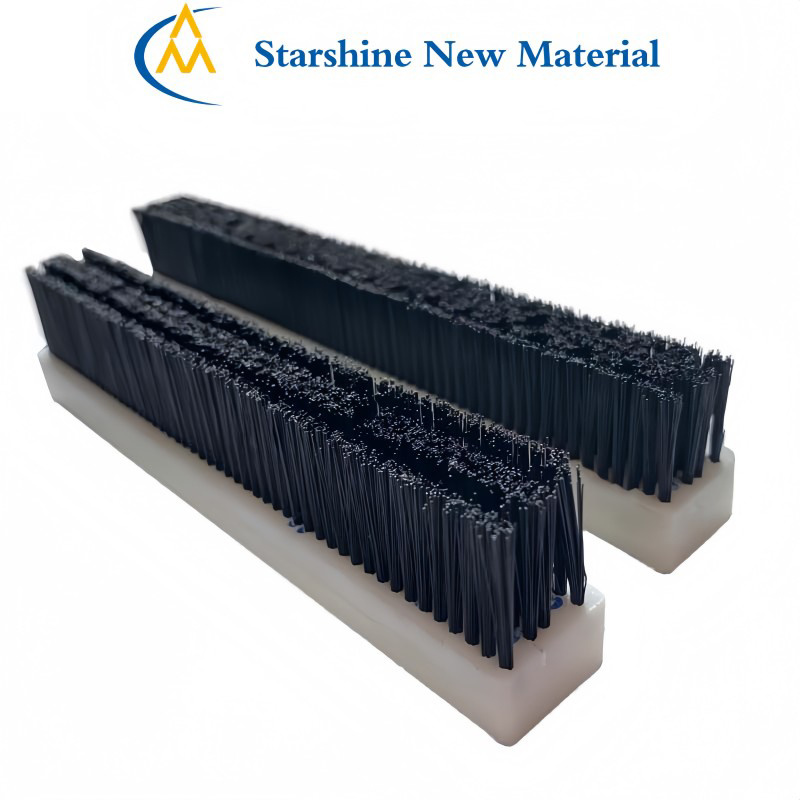
Aiming at different needs such as tool treatment, curved surface polishing, and gap deburring, "efficient operation + convenient operation" is realized through the customization of brush head shape, matrix type, and connection method:Diamond Brush: Core shapes are "disc type/pen type". The disc type (diameter 50-200mm) uses electroplated diamond abrasives with a grit size of 80#-1000#, compatible with angle grinders for rough grinding and chamfering of ceramic substrates and glass curtain walls; the pen type (brush head diameter 3-10mm) uses sintered diamond, suitable for micro-processing of semiconductor silicon wafers and gemstones, and can go deep into holes below φ5mm for processing. The abrasive hardness is over HV10000, and the processing efficiency is 5-8 times that of conventional abrasive brushes.Tool Passivation Brush: Exclusive "bowl type/cylindrical type" structure. The bowl type is suitable for the outer circle passivation of tool cutting edges, and the cylindrical type is suitable for the inner edge passivation of hole machining tools. It uses 0.3-0.5mm diamond wire or DuPont nylon embedded with silicon carbide, with a wire planting density of 800-1200 wires per square centimeter. It can accurately control the tool cutting edge arc radius R0.01-0.1mm, increasing the tool service life by 30%-50%, and is suitable for precision tools such as end mills, drills, and taps.DuPont Nylon Wheel Brush: Designed with "wheel-shaped brush head + central shaft hole". The brush head diameter is 100-300mm, width is 20-80mm, and the DuPont nylon is embedded with 240#-800# silicon carbide abrasives. It has good flexibility and a rebound rate ≥ 85%, suitable for deburring and precision grinding of curved workpieces (automotive wheel hubs, aluminum profiles), avoiding workpiece deformation caused by rigid abrasives. The surface roughness after grinding can reach Ra0.4μm.Diamond Wire Tool Brush: "Straight shank + dense brush head" structure. The diamond wire diameter is 0.15-0.8mm (titanium-plated reinforced high-carbon steel wire), the brush head length is 10-50mm, and the shank diameter is φ6-φ12mm. With a hardness of HRC55-60, its wear resistance is 3 times that of conventional steel wire. It is used for deburring of cemented carbide tools, cutting edge dressing of woodworking tools, and surface grinding of carbon fiber composites to avoid fiber fraying.Deburring Brush: Covering "disc type/bar type/pipeline type". The disc type (diameter 30-100mm) is used for burrs on the edges and corners of flat workpieces; the bar type (brush surface width 5-20mm) is equipped with a handle for manual cleaning of gear tooth grooves and radiator gaps; the pipeline type (brush head diameter 5-50mm) is used for burr treatment of pipe inner walls and hydraulic valve holes. Some models are equipped with a guide head to ensure uniform grinding inside the holes.Polishing Brush: Divided into "abrasive wire type" and "soft wire type". The abrasive wire type (containing aluminum oxide abrasives, grit size 800#-2000#) is used for rough to semi-finish polishing of metal parts; the soft wire type (mixed with wool and abrasives) is used for precision polishing of stainless steel tableware and hardware pendants, which can reduce the surface roughness from Ra0.8μm to Ra0.08μm, presenting a mirror effect. The brush head has disc, plate, and bowl shapes to adapt to different workpiece shapes.Abrasive Brush: A general-purpose tool, classified by abrasives into brown corundum brushes (40#-120#, for rough grinding and rust removal), white corundum brushes (150#-400#, for semi-finish grinding and scratch removal), and silicon carbide brushes (500#-1000#, for precision grinding and polishing). The brush head structure is flexible and can be customized into plate brushes, wheel brushes, and pen brushes, suitable for the full-process surface treatment of conventional metals such as carbon steel, stainless steel, and cast iron. With high cost-effectiveness, it is a basic tool in general manufacturing scenarios.II. Core Application Scenarios: Covering Surface Treatment Needs of Multiple Industries
With "differentiated abrasives + targeted structure", this series of tools has deeply penetrated into industries such as precision manufacturing, automotive, electronics, and hardware, covering the full-process surface treatment of workpieces from processing to finished products.1. Precision Tool and Mold Manufacturing: Cutting Edge Optimization and Surface Finishing
The service life and precision of precision tools and molds depend on "precision passivation + non-damaging grinding", and this series of tools forms an exclusive solution:Tool Manufacturing Process: The cutting edge passivation of end mills and drills adopts bowl-type tool passivation brushes, and a uniform arc cutting edge is formed through the flexible grinding of diamond wire to avoid cutting edge chipping; the thread root burrs of taps are cleaned with T-shaped deburring brushes to ensure thread machining precision; the surface scratches of cemented carbide tools are repaired with fine-grit diamond brushes (1000#-2000#) to improve the tool surface quality.Mold Processing and Maintenance: The parting surface burrs of injection molds are removed with DuPont nylon wheel brushes to avoid flash on plastic products; the worn cutting edges of stamping molds are lightly ground with diamond wire tool brushes to restore sharpness; the runner residues of die-casting molds are cleaned with abrasive brushes (brown corundum 80#) to extend the mold service life.2. Automotive and Component Manufacturing: Efficient Deburring and Appearance Enhancement
The mass production of automotive components has high requirements on "efficiency + consistency" of tools, and this series of tools is suitable for both automated and manual operation scenarios:Engine and Chassis Components: The casting burrs of engine blocks are removed by disc-type deburring brushes (diamond wire material) combined with automated equipment, with an efficiency of 10 pieces per minute; the tooth surface burrs of gearbox gears are cleaned with bar-type deburring brushes to ensure smooth meshing; the rust removal of chassis suspension components (carbon steel material) is processed with brown corundum abrasive brushes in preparation for subsequent coating.Body and Appearance Parts: The casting burrs of automotive wheel hubs (aluminum alloy) are ground with DuPont nylon wheel brushes to avoid damaging the hub curved surface; the welding spatter of body sheet metal parts is removed with abrasive brushes (white corundum 150#); the surface polishing of stainless steel exhaust pipes is processed with polishing brushes (abrasive wire 800#) to present a matte metal texture.3. Electronics and Semiconductor Industry: Precision Micro-Processing and Surface Protection
The "miniaturization + high precision" of electronic components requires tools to have both "fineness + non-damage", making superhard abrasives and flexible brushes the core choice:Semiconductor and Chip Manufacturing: The cutting burrs of silicon wafers are cleaned with pen-type diamond brushes (2000# grit) to avoid damaging the chip circuit; the via burrs of semiconductor packaging substrates are processed with micro deburring brushes to ensure electrical conductivity.Consumer Electronics Components: The CNC machining burrs of mobile phone middle frames (aluminum alloy/stainless steel) are removed with DuPont nylon wheel brushes, ensuring no scratches on the surface after grinding; the screw hole burrs of computer casings are cleaned with pipeline-type deburring brushes to ensure smooth assembly; the terminal oxide layer of electronic connectors is lightly ground with fine-abrasive polishing brushes (1000#) to restore conductivity.4. Hardware and Decoration Industry: Surface Texture and Aesthetics Enhancement
The market competitiveness of hardware products and decorative materials depends on "surface texture", and this series of tools realizes full-process beautification from "rough grinding to precision polishing":Hardware Product Processing: The stamping burrs of stainless steel tableware are removed with soft deburring brushes to avoid hand scratches; the surface polishing of copper faucets is processed with polishing brushes (wool + abrasives) to present a mirror effect; the welding marks of hardware pendants are ground with white corundum abrasive brushes (400#) to make the surface smooth and beautiful.Decorative Material Processing: The cutting burrs of aluminum alloy ceiling panels are cleaned with bar-type abrasive brushes to ensure a smooth hand feel during installation; the antique copper decorative parts are artificially aged with coarse-grit abrasive brushes (80#) to create a retro texture; the installation chamfers of glass curtain walls are processed with disc-type diamond brushes to improve safety and aesthetics.5. General Machinery and Pipeline Engineering: Conventional Grinding and Maintenance
The maintenance of general machinery and pipelines requires "efficient rust removal + convenient operation", and general abrasive brushes and special brushes have outstanding adaptability:Mechanical Component Maintenance: The oil stains and burrs on hydraulic pump housings are cleaned simultaneously with deburring brushes; the thread hole burrs of motor end covers are processed with micro brushes to ensure tight bolt connection; the dust and rust on fan impellers are removed with disc-type abrasive brushes to improve heat dissipation efficiency.Pipeline Engineering Processing: The pre-installation rust removal of carbon steel pipelines is processed with brown corundum abrasive brushes (40#) to remove oxide scale; the welding seams of stainless steel pipelines are ground with white corundum brushes (240#) to make the seams flush with the pipeline surface; the cutting burrs of plastic pipelines are cleaned with flexible deburring brushes to avoid blockage during transportation.III. Selection Guidelines and Summary of Core Advantages
1. Scientific Selection Guidelines: Precise Matching of Requirements
Select abrasives by workpiece material: For hard and brittle materials (ceramics, cemented carbide), choose diamond/diamond wire brushes; for soft metals (aluminum, copper), choose DuPont nylon brushes; for conventional metals (carbon steel, stainless steel), choose brown corundum/white corundum abrasive brushes; for precision part polishing, choose soft polishing brushes.Select types by operation requirements: For tool passivation, choose special passivation brushes; for deburring of curved surfaces/soft workpieces, choose DuPont nylon wheel brushes; for hard and brittle material processing, choose diamond brushes; for internal hole/gap processing, choose pipeline-type/bar-type deburring brushes; for precision polishing, choose polishing brushes; for general scenarios, choose abrasive brushes.Select specifications by equipment type: For automated production lines, choose large-diameter wheel brushes (suitable for robotic arms); for angle grinders, choose disc brushes; for manual operation, choose plate-type/bar-type brushes with handles; for micro-processing, choose pen-type/micro brushes.2. Core Competitive Advantages: Full-Process Value Embodiment
Compared with single-function tools, this series of products has three core advantages: First, full-process coverage. From rough grinding and rust removal, deburring to cutting edge passivation and precision polishing, one set of tools meets the needs of multiple links, reducing the frequency of tool replacement. Second, strong working condition adaptability. From superhard to soft abrasives and diverse brush head structures, it adapts to workpieces of different materials and shapes, improving processing precision. Third, balanced efficiency and service life. Precision processes ensure abrasive firmness, with a service life 3-5 times that of conventional tools, while increasing operation efficiency by 20%-50%.With the upgrading of industrial manufacturing towards "precision and automation", this series of abrasive brushes will continue to adapt to high-end fields such as aerospace and new energy through abrasive upgrading (such as nano-coated diamonds) and structural innovation (such as quickly replaceable brush heads), becoming a standard tool for industrial surface treatment.
Message
Please provide the following valid information, and we will contact you as soon as possible.
Mobile:
Wechat/Whatsapp:
E-mail:
Address:
No. 123 Yuantan Avenue, Yuantan Town, Anqing City, Anhui Province, China


Online Message
If you have any product related questions, please feel free to contact us!
Copyright © 2025 Starshine New Materials Technology Co., Ltd.
Business License