


PRODUCTS
PRODUCTS

Precision Explosion-Proof Copper Wire Brush Series
Precision Explosion-Proof Copper Wire Brush Series: High-Efficiency Surface Treatment Tools for Special Scenarios
Dense Copper Wire Shank Flat Brushes, Polishing Brushes, T-Shaped Copper Wire Brushes, Pure Copper Brushes, and Explosion-Proof Grinding Brushes form a specialized set of copper wire tools developed for precision manufacturing and explosion-proof industrial scenarios. With the technical core of "high-purity copper wire as base material + structural customization + explosion-proof process", this series leverages the low hardness, high electrical conductivity, non-magnetism, and explosion-proof properties of pure copper wire. It provides a "wire-loss-free, non-damaging, and explosion-proof" solution for the needs of "precision grinding, gap cleaning, and safe polishing" of electronic precision components and equipment in explosion-proof areas. Addressing the pain points of ordinary steel wire brushes (prone to scratching workpieces and electrostatic risks) and conventional copper wire brushes (loose wire planting and poor adaptability), it has become an exclusive tool for precision and explosion-proof scenarios.
I. Core Product Features: Precise Matching of Material Advantages and Structural Design
The competitiveness of this product series stems from the "scenario adaptability of pure copper wire materials" and "function focus of differentiated structures". Through material grading, wire planting technology, and shape optimization, it realizes the exclusive value of each tool.
1. Core Support: Material Properties and Process Guarantee of Pure Copper Wire
Based on the special requirements of precision and explosion-proof scenarios, T2/T3 high-purity electrolytic copper wire is adopted, combined with dense wire planting, explosion-proof treatment and other processes to build a core performance barrier:
- Pure Copper Wire Material Benchmark: Copper content ≥ 99.5%, electrical conductivity ≥ 97%, hardness HRC20-25 (much lower than steel), flexible elongation ≥ 38%. The low hardness can avoid scratching soft workpieces such as aluminum, copper, and plastic; high flexibility adapts to the fitting grinding of curved surfaces and gaps; non-magnetic property is suitable for non-magnetic scenarios such as electronics and military industry; explosion-proof property (no spark generation, anti-static) meets the operation requirements in flammable and explosive environments. Wire diameter gradient ranges from 0.05 to 0.8mm, adapting to different needs from precision polishing to rough grinding.
- Key Process Advantages: Dense models adopt "mechanical wire pressing + high-temperature curing" process, with wire planting density of 1200-1800 wires per square centimeter and wire loss rate ≤ 0.05%/300 hours; explosion-proof models additionally undergo "static elimination treatment", with surface resistance stably maintained at 10⁶-10⁹Ω, complying with the GB 50016-2014 explosion-proof standard; polishing brushes adopt "fine rounding of wire ends" treatment to avoid workpiece surface scratches caused by sharp corners of copper wires and ensure that the roughness after grinding meets the standard.
- Common Performance Guarantee: The radial runout error of brush heads in the whole series is ≤ 0.08mm, temperature resistance range is -30℃ to 150℃, which can adapt to dry and wet operations (dry grinding for deburring, wet grinding for polishing). Pure copper wire is recyclable, conforming to environmental protection requirements.
2. Classified Structural Design: Functional Optimization for Scenario Adaptation
Aiming at different needs such as flat surface grinding, gap cleaning, precision polishing, and explosion-proof operations, "dead-angle-free coverage + convenient operation" is realized through the customization of brush head shape and shank design:
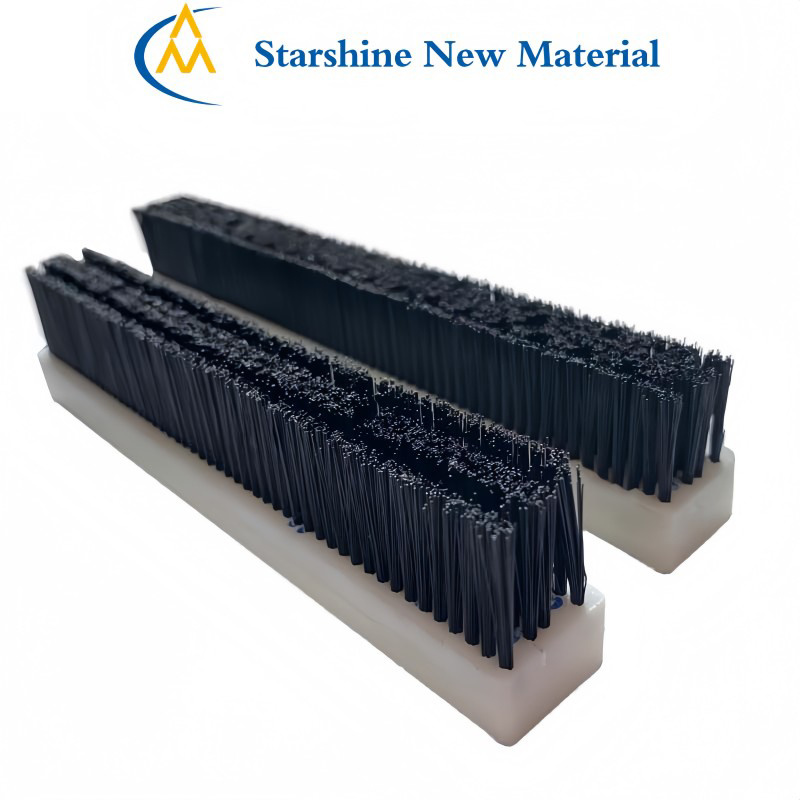
- Dense Copper Wire Shank Flat Brush: Core design of "high-density wire planting + solid copper shank". The brush surface size (length × width) is optional from 20×50mm to 50×150mm, and the shank diameter is φ6-φ12mm (connectable to electric tools). The wire planting density is 1500 wires per square centimeter (0.1-0.3mm fine copper wire). The flatness error of the brush surface is ≤ 0.03mm, suitable for deburring of flat precision components such as PCB boards and mobile phone middle frames. The rigidity of the copper shank ensures uniform grinding force, avoiding force fluctuations in manual operation.
- Copper Wire Polishing Brush: Divided into "disc type" and "plate type". The disc type (diameter 50-150mm) adopts 0.05-0.1mm tin-plated pure copper wire with a wire planting density of 1800 wires per square centimeter, compatible with micro electric grinders (rotating speed 500-2000 rpm). It is used for precision polishing of jewelry and optical lens metal bases, which can reduce the surface roughness from Ra0.4μm to Ra0.08μm; the plate type (brush surface width 10-30mm) is equipped with a wooden handle, manually used for surface brightening of musical instr
- Commodity name: Precision Explosion-Proof Copper Wire Brush Series
- Description
-
Precision Explosion-Proof Copper Wire Brush Series: High-Efficiency Surface Treatment Tools for Special Scenarios
Dense Copper Wire Shank Flat Brushes, Polishing Brushes, T-Shaped Copper Wire Brushes, Pure Copper Brushes, and Explosion-Proof Grinding Brushes form a specialized set of copper wire tools developed for precision manufacturing and explosion-proof industrial scenarios. With the technical core of "high-purity copper wire as base material + structural customization + explosion-proof process", this series leverages the low hardness, high electrical conductivity, non-magnetism, and explosion-proof properties of pure copper wire. It provides a "wire-loss-free, non-damaging, and explosion-proof" solution for the needs of "precision grinding, gap cleaning, and safe polishing" of electronic precision components and equipment in explosion-proof areas. Addressing the pain points of ordinary steel wire brushes (prone to scratching workpieces and electrostatic risks) and conventional copper wire brushes (loose wire planting and poor adaptability), it has become an exclusive tool for precision and explosion-proof scenarios.I. Core Product Features: Precise Matching of Material Advantages and Structural Design
The competitiveness of this product series stems from the "scenario adaptability of pure copper wire materials" and "function focus of differentiated structures". Through material grading, wire planting technology, and shape optimization, it realizes the exclusive value of each tool.1. Core Support: Material Properties and Process Guarantee of Pure Copper Wire
Based on the special requirements of precision and explosion-proof scenarios, T2/T3 high-purity electrolytic copper wire is adopted, combined with dense wire planting, explosion-proof treatment and other processes to build a core performance barrier:Pure Copper Wire Material Benchmark: Copper content ≥ 99.5%, electrical conductivity ≥ 97%, hardness HRC20-25 (much lower than steel), flexible elongation ≥ 38%. The low hardness can avoid scratching soft workpieces such as aluminum, copper, and plastic; high flexibility adapts to the fitting grinding of curved surfaces and gaps; non-magnetic property is suitable for non-magnetic scenarios such as electronics and military industry; explosion-proof property (no spark generation, anti-static) meets the operation requirements in flammable and explosive environments. Wire diameter gradient ranges from 0.05 to 0.8mm, adapting to different needs from precision polishing to rough grinding.Key Process Advantages: Dense models adopt "mechanical wire pressing + high-temperature curing" process, with wire planting density of 1200-1800 wires per square centimeter and wire loss rate ≤ 0.05%/300 hours; explosion-proof models additionally undergo "static elimination treatment", with surface resistance stably maintained at 10⁶-10⁹Ω, complying with the GB 50016-2014 explosion-proof standard; polishing brushes adopt "fine rounding of wire ends" treatment to avoid workpiece surface scratches caused by sharp corners of copper wires and ensure that the roughness after grinding meets the standard.Common Performance Guarantee: The radial runout error of brush heads in the whole series is ≤ 0.08mm, temperature resistance range is -30℃ to 150℃, which can adapt to dry and wet operations (dry grinding for deburring, wet grinding for polishing). Pure copper wire is recyclable, conforming to environmental protection requirements.2. Classified Structural Design: Functional Optimization for Scenario Adaptation
Aiming at different needs such as flat surface grinding, gap cleaning, precision polishing, and explosion-proof operations, "dead-angle-free coverage + convenient operation" is realized through the customization of brush head shape and shank design:Dense Copper Wire Shank Flat Brush: Core design of "high-density wire planting + solid copper shank". The brush surface size (length × width) is optional from 20×50mm to 50×150mm, and the shank diameter is φ6-φ12mm (connectable to electric tools). The wire planting density is 1500 wires per square centimeter (0.1-0.3mm fine copper wire). The flatness error of the brush surface is ≤ 0.03mm, suitable for deburring of flat precision components such as PCB boards and mobile phone middle frames. The rigidity of the copper shank ensures uniform grinding force, avoiding force fluctuations in manual operation.Copper Wire Polishing Brush: Divided into "disc type" and "plate type". The disc type (diameter 50-150mm) adopts 0.05-0.1mm tin-plated pure copper wire with a wire planting density of 1800 wires per square centimeter, compatible with micro electric grinders (rotating speed 500-2000 rpm). It is used for precision polishing of jewelry and optical lens metal bases, which can reduce the surface roughness from Ra0.4μm to Ra0.08μm; the plate type (brush surface width 10-30mm) is equipped with a wooden handle, manually used for surface brightening of musical instrument copper parts and hardware pendants.T-Shaped Copper Wire Brush: Featured with T-shaped structure of "horizontal brush head + straight shank". The horizontal brush head length is 10-40mm, copper wire length is 5-15mm (0.15-0.5mm), and shank length is 100-300mm. The horizontal brush head can go deep into narrow spaces such as grooves, gaps, and thread roots, suitable for cleaning gear tooth grooves, radiator gaps, and pipeline flange sealing grooves. It solves the problem that ordinary brushes "cannot reach or clean thoroughly". Some models have a 360° rotatable horizontal brush head to improve flexibility.Pure Copper Brush: Covers two forms: "pen type" and "bowl type". The pen type (brush head diameter 3-8mm) adopts 0.05-0.1mm pure copper wire, used for micro-cleaning of electronic component pins and circuit board vias; the bowl type (inner concave radius R5-R20mm) is suitable for curved workpieces (such as copper valves and instrument housings), which fits perfectly with the curved surface during grinding to avoid local missing grinding. Pure copper brushes have no impurity residue, suitable for hygienic scenarios such as food machinery and medical equipment.Explosion-Proof Grinding Brush: Core structure of "pure copper wire + aluminum alloy explosion-proof base". The base is anodized (to avoid friction sparks), and the wire planting process meets the explosion-proof grade requirement of Ex d IIB T4 Gb. It has two types: disc type (diameter 80-200mm, compatible with explosion-proof angle grinders) and plate type (with insulated handle for manual operation). It is used for equipment rust removal and pipeline grinding in chemical workshops, coal mine underground, oil depots and other areas. It does not generate mechanical sparks or static electricity during operation, ensuring safety.II. Core Application Scenarios: Covering Two Core Fields of Precision and Explosion-Proof
With the "protective properties of pure copper wire + targeted structure + explosion-proof safety", this series of tools has deeply penetrated into precision manufacturing and explosion-proof industries, solving the surface treatment pain points in special scenarios.1. Electronics and Precision Manufacturing Industry: Protective Surface Treatment
The "micro-size and high-precision" of electronic components and precision parts require tools to have both "fineness" and "non-damage", making pure copper wire tools the core choice:Electronic Component Processing: The vias (φ0.1-0.5mm) of PCB circuit boards are cleaned of resin and copper chips remaining after drilling with pure copper pen-type brushes to protect the copper-plated layer on the via walls; the aluminum alloy middle frames of mobile phones and computers are deburred with dense copper wire shank flat brushes to remove micro-burrs after CNC processing, avoiding scratches on the anodized layer; the copper heat dissipation base of semiconductor chips is precision polished with polishing brushes to improve heat dissipation efficiency.Precision Instrument Manufacturing: The metal housings of medical equipment (blood glucose meters, electrocardiographs) are ground with pure copper bowl-type brushes to ensure smooth and scratch-free surfaces; the copper joints of aerospace sensors are cleaned of oil stains in thread gaps with T-shaped copper wire brushes to ensure connection conductivity; the terminals of electronic connectors (Type-C, HDMI) have their oxide layers removed with fine copper wire polishing brushes to restore contact performance.Consumer Electronics Assembly: The housings of smart watches and metal parts of earphones are ground with plate-type polishing brushes. The flexibility of pure copper wire avoids leaving grinding marks; the battery poles (copper material) of new energy vehicles are lightly ground with dense copper wire brushes to ensure good conductive contact between the poles and wire harnesses.2. Explosion-Proof Industrial Field: Safe Grinding Operation
The "flammable and explosive" environment in chemical, coal, petroleum and other industries requires absolute tool safety, and explosion-proof grinding brushes realize the balance between "safety and efficiency":Chemical and Petrochemical Industry: The reactors and pipelines (carbon steel/stainless steel material) in chemical workshops are derusted with explosion-proof disc brushes to avoid material contamination by rust; the oil pipeline interfaces in oil depots are cleaned of oil stains and floating rust with explosion-proof plate-type brushes to ensure tight flange sealing; the metal brackets of solvent storage tanks are ground with manual explosion-proof brushes, operating away from ignition sources and complying with safety regulations.Coal Mining and Oil-Gas Extraction: The hydraulic supports and roadheader components in coal mines are cleaned of hardened coal slime and rust with explosion-proof disc brushes (compatible with explosion-proof angle grinders); the oil pipelines on oil and gas drilling platforms are ground with pure copper explosion-proof brushes to avoid spark-induced explosions; the metal parts of oil tankers in gas stations are maintained with explosion-proof brushes with insulated handles to ensure safe static discharge.Pharmaceutical and Food Explosion-Proof Workshops: The stainless steel equipment (fermenters, conveying pipelines) in pharmaceutical GMP workshops are cleaned with explosion-proof pure copper brushes, which not only meet explosion-proof requirements but also avoid iron ion contamination of medicines; the metal equipment in food processing workshops (flour mills, edible oil factories) are ground with explosion-proof plate-type brushes. Pure copper wires have no falling residues, complying with food hygiene standards.3. Hardware and Decoration Industry: Fine Surface Beautification
The surface texture and aesthetics of hardware products and decorative materials rely on "fine grinding" of tools. Pure copper wire tools can realize "texture protection + gloss enhancement":Copper Hardware Processing: Copper door handles and copper chandelier brackets are precision polished with polishing brushes to highlight the natural metallic luster of copper; the surface scratches of brass faucets are repaired with pure copper bowl-type brushes to avoid excessive grinding damage to the electroplated layer; the dust and oxide layers in the carved gaps of copper crafts (ornaments, sculptures) are cleaned with T-shaped copper wire brushes to restore detailed texture.Decorative Material Treatment: The cut burrs of aluminum alloy ceiling panels and stainless steel decorative strips are removed with dense copper wire shank flat brushes to ensure smooth hand feel during installation; the antique copper decorative parts are artificially aged with thick-wire pure copper brushes to create a retro texture; the gaps of hollow patterns on metal screens are cleaned with T-shaped brushes to ensure clear patterns.Musical Instrument Manufacturing: The inner walls of brass instruments (trumpets, saxophones) are cleaned of carbon deposits and oil stains with long-shank pure copper brushes to improve sound quality; the copper accessories (tuning pegs, frets) of guitars and violins are ground with fine copper wire polishing brushes to ensure smooth surfaces without string jamming.4. General Machinery and Equipment Maintenance: Protective Cleaning
The maintenance of soft metal parts and precision mating surfaces in ordinary machinery requires tools to "remove stains without damaging the substrate", and pure copper wire tools have outstanding adaptability:Hydraulic and Pneumatic Systems: The copper valve cores of hydraulic valves and pneumatic joints are cleaned of oil stains and iron chips with pure copper pen-type brushes to avoid scratching the valve cores and affecting sealing; the copper interfaces of hydraulic oil pipes are cleaned of threads with T-shaped brushes to ensure tight connection without leakage.Mold and Fixture Maintenance: The parting surfaces (aluminum alloy material) of plastic molds are cleaned of plastic residues with dense copper wire shank flat brushes to avoid scratching the mold surface; the copper positioning pins of tooling fixtures are ground to remove oxide layers with pure copper brushes to ensure positioning accuracy.Ship and Marine Equipment: The copper propellers and copper alloy pipelines on ships are derusted with pure copper brushes. The compatibility between pure copper wires and copper materials avoids electrochemical corrosion; the copper instrument housings on offshore platforms are maintained with polishing brushes to improve the stability of seawater corrosion resistance.III. Selection Guidelines and Summary of Core Advantages
1. Scientific Selection Guidelines: Precise Matching of Scenario Requirements
Select wire diameter by operation precision: For precision electronic components (vias, terminals), select 0.05-0.1mm fine copper wire; for conventional deburring, select 0.15-0.3mm; for rough grinding and rust removal, select 0.5-0.8mm.Select products by structural shape: For flat/large surface grinding, select dense copper wire shank flat brush; for curved/surface grinding, select pure copper bowl-type brush; for gap/groove cleaning, select T-shaped copper wire brush; for precision polishing, select polishing brush; for explosion-proof scenarios, explosion-proof grinding brush is a must.Select configuration by environment and equipment: For explosion-proof areas, explosion-proof brushes with Ex d IIB T4 or higher grade are required; for electric operation, select rod-type/disc-type brushes with standard interfaces; for manual operation, select plate-type brushes with non-slip/insulated handles.2. Core Competitive Advantages: Exclusive Value in Special Scenarios
Compared with traditional tools such as steel wire brushes and nylon brushes, this series of products has four core advantages: First, precision protection. The low hardness of pure copper wire avoids scratching soft workpieces and precision surfaces, improving product qualification rate; second, explosion-proof safety. Explosion-proof models comply with industrial safety standards, solving the operation risks in flammable and explosive environments; third, gap adaptability. Special structures such as T-shape can go deep into narrow spaces to realize dead-angle-free treatment; fourth, environmental protection and cleanliness. Pure copper wire has no falling residues, suitable for hygienic scenarios such as food and medical care, and is recyclable.With the upgrading of precision manufacturing towards "micro-nanoization" and industrial production towards "safety", this series of copper wire brushes will continue to adapt to higher-end scenarios such as semiconductors and new energy explosion-proof through material upgrading (such as ultra-fine silver-plated copper wire) and structural innovation (such as replaceable brush heads), becoming a core tool for special surface treatment.
Message
Please provide the following valid information, and we will contact you as soon as possible.
Mobile:
Wechat/Whatsapp:
E-mail:
Address:
No. 123 Yuantan Avenue, Yuantan Town, Anqing City, Anhui Province, China


Online Message
If you have any product related questions, please feel free to contact us!
Copyright © 2025 Starshine New Materials Technology Co., Ltd.
Business License