


PRODUCTS
PRODUCTS

Copper wire pipe brush
Industrial-Grade Copper Wire Pipe Brush Series: Core Tools for Precision Processing of Inner Holes and Special Structures
Pipe brushes, copper wire brushes, precision polishing and grinding brushes, deburring and rust-removing brushes, inner hole cleaning brushes, and dense industrial brushes form a specialized set of surface treatment tools developed for the industrial precision manufacturing field. Centered on the core concept of "copper wire material empowering performance + structural customization adapting to scenarios", this series leverages the excellent electrical conductivity, toughness, and wear resistance of copper wires (pure copper/brass). It provides a full-process solution of "rust removal - deburring - polishing - cleaning" for special structures that are difficult to reach with traditional tools, such as pipe inner holes, deep cavities, and threads. Addressing the pain points of ordinary tools, such as "poor adaptability, easy workpiece scratching, and incomplete processing", it is widely used in automotive manufacturing, electronic precision processing, hardware molds, and other industries.
I. Core Product Features: Dual Precision of Copper Wire Material and Structural Design
The core competitiveness of this product series stems from the in-depth integration of the material advantages of high-purity copper wires and scenario-based structural design. Each tool achieves function concentration through the optimization of copper wire selection, filament planting process, and brush head shape.
1. Core Material: Graded Selection and Performance Advantages of Copper Wires
T2 pure copper, H62 brass, and copper alloy wires are selected according to working conditions. Through differentiated configuration of wire diameter gradients (0.05-0.8mm) and surface treatments (oil-free/tin-plated), they match different precision and strength requirements:
- Material Performance Benchmark: Pure copper wires have a conductivity ≥ 98% and an elongation ≥ 35%, with excellent flexibility, suitable for precision component polishing; brass wires have a hardness of HRC15-20 and better corrosion resistance than pure copper, suitable for medium-intensity rust removal and deburring; copper alloy wires (containing 1-3% tin) have a hardness increased to HRC25-30, and their wear resistance is twice that of pure copper wires, suitable for heavy-load working conditions.
- Wire Diameter and Precision Matching: Fine copper wires (0.05-0.2mm) are used for micro-deburring of electronic components and precision molds; medium-coarse copper wires (0.3-0.5mm) are used for rust removal and inner hole grinding of conventional metal parts; coarse copper wires (0.6-0.8mm) are used for removing thick rust layers on large pipes and castings.
- Filament Planting Process Guarantee: Adopting the "mechanical wire pressing + high-temperature curing" process, the filament density is 200-800 filaments per square centimeter (up to 1200 filaments per square centimeter for dense models). The copper wire loss rate is ≤ 0.5%/100 hours, and the brush head radial runout error is ≤ 0.1mm, ensuring uniform processing.
2. Classified Structural Design: Functional Optimization for Special Structures
Aiming at the structural characteristics of pipe inner holes, deep cavities, threads, etc., through the customization of brush head shape, rod design, and connection method, "dead-angle-free coverage + efficient operation" is realized:
- Pipe Inner Hole Cleaning Brush: Core design of "flexible brush head + rigid rod body". The brush head diameter ranges from 5-100mm (customizable), and the length is 100-1000mm, suitable for inner holes of pipes with φ6-φ105mm. The brush head adopts spiral filament planting, with copper wires at a 30° inclination angle, which forms spiral cutting force during rotation and can simultaneously remove rust spots, welding slag, and oil stains in the inner hole. The rod body is made of 45# steel with chrome plating, with a straightness error ≤ 0.2mm/m, which can be connected to electric drills (rotating speed 300-1500 rpm) or pneumatic tools. The deep-hole model is equipped with a guide head to avoid brush head deviation.
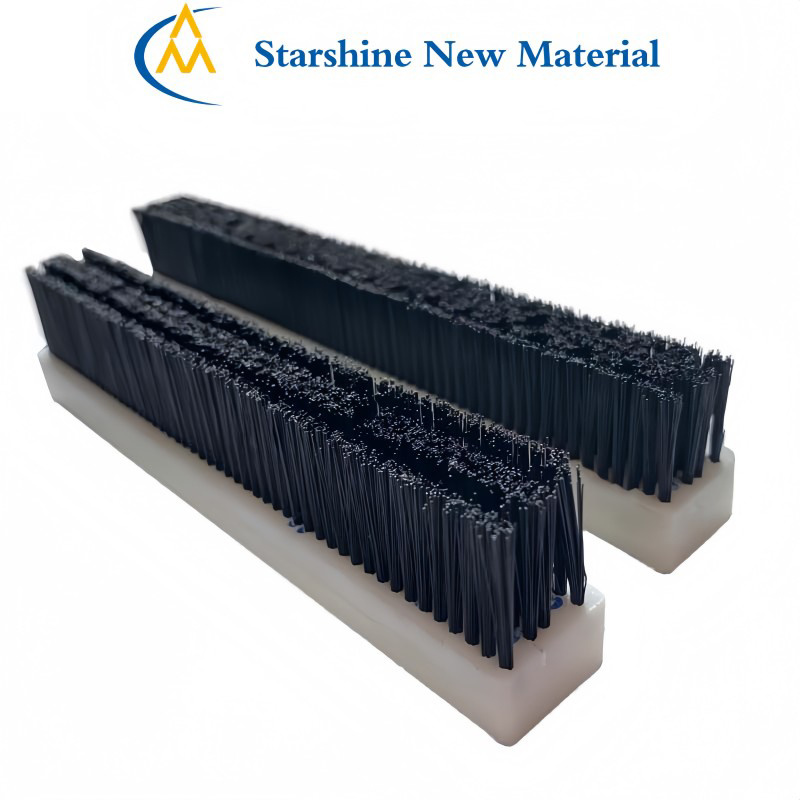
- Copper Wire Deburring and Rust-Removing Brush: Available in three forms: "disc-shaped, pen-shaped, and plate-shaped". Disc-shaped brushes (diameter 50-200mm) are compatible with angle grinders for large-area rust removal on flat and curved surfaces; pen-shaped brushes (brush head diameter 3-10mm) use fine pure copper wires for micro-deburring of mold parting surfaces and gear tooth grooves; plate-shaped brushes (brush surface width 10-50mm) have dense filament planting, used for deburring the edges of metal plates to avoid burrs caused by traditional sandpaper.
- Precision Polishing and Grinding Brush: Uses 0.05-0.1mm tin-plated pure copper wires, with a filament density ≥ 800 filaments per square centimeter. The brush head is finely trimmed, with a flatness error ≤ 0.02mm. Compatible with micro electr
- Commodity name: Copper wire pipe brush
- Description
-
Industrial-Grade Copper Wire Pipe Brush Series: Core Tools for Precision Processing of Inner Holes and Special Structures
Pipe brushes, copper wire brushes, precision polishing and grinding brushes, deburring and rust-removing brushes, inner hole cleaning brushes, and dense industrial brushes form a specialized set of surface treatment tools developed for the industrial precision manufacturing field. Centered on the core concept of "copper wire material empowering performance + structural customization adapting to scenarios", this series leverages the excellent electrical conductivity, toughness, and wear resistance of copper wires (pure copper/brass). It provides a full-process solution of "rust removal - deburring - polishing - cleaning" for special structures that are difficult to reach with traditional tools, such as pipe inner holes, deep cavities, and threads. Addressing the pain points of ordinary tools, such as "poor adaptability, easy workpiece scratching, and incomplete processing", it is widely used in automotive manufacturing, electronic precision processing, hardware molds, and other industries.I. Core Product Features: Dual Precision of Copper Wire Material and Structural Design
The core competitiveness of this product series stems from the in-depth integration of the material advantages of high-purity copper wires and scenario-based structural design. Each tool achieves function concentration through the optimization of copper wire selection, filament planting process, and brush head shape.1. Core Material: Graded Selection and Performance Advantages of Copper Wires
T2 pure copper, H62 brass, and copper alloy wires are selected according to working conditions. Through differentiated configuration of wire diameter gradients (0.05-0.8mm) and surface treatments (oil-free/tin-plated), they match different precision and strength requirements:Material Performance Benchmark: Pure copper wires have a conductivity ≥ 98% and an elongation ≥ 35%, with excellent flexibility, suitable for precision component polishing; brass wires have a hardness of HRC15-20 and better corrosion resistance than pure copper, suitable for medium-intensity rust removal and deburring; copper alloy wires (containing 1-3% tin) have a hardness increased to HRC25-30, and their wear resistance is twice that of pure copper wires, suitable for heavy-load working conditions.Wire Diameter and Precision Matching: Fine copper wires (0.05-0.2mm) are used for micro-deburring of electronic components and precision molds; medium-coarse copper wires (0.3-0.5mm) are used for rust removal and inner hole grinding of conventional metal parts; coarse copper wires (0.6-0.8mm) are used for removing thick rust layers on large pipes and castings.Filament Planting Process Guarantee: Adopting the "mechanical wire pressing + high-temperature curing" process, the filament density is 200-800 filaments per square centimeter (up to 1200 filaments per square centimeter for dense models). The copper wire loss rate is ≤ 0.5%/100 hours, and the brush head radial runout error is ≤ 0.1mm, ensuring uniform processing.2. Classified Structural Design: Functional Optimization for Special Structures
Aiming at the structural characteristics of pipe inner holes, deep cavities, threads, etc., through the customization of brush head shape, rod design, and connection method, "dead-angle-free coverage + efficient operation" is realized:Pipe Inner Hole Cleaning Brush: Core design of "flexible brush head + rigid rod body". The brush head diameter ranges from 5-100mm (customizable), and the length is 100-1000mm, suitable for inner holes of pipes with φ6-φ105mm. The brush head adopts spiral filament planting, with copper wires at a 30° inclination angle, which forms spiral cutting force during rotation and can simultaneously remove rust spots, welding slag, and oil stains in the inner hole. The rod body is made of 45# steel with chrome plating, with a straightness error ≤ 0.2mm/m, which can be connected to electric drills (rotating speed 300-1500 rpm) or pneumatic tools. The deep-hole model is equipped with a guide head to avoid brush head deviation.Copper Wire Deburring and Rust-Removing Brush: Available in three forms: "disc-shaped, pen-shaped, and plate-shaped". Disc-shaped brushes (diameter 50-200mm) are compatible with angle grinders for large-area rust removal on flat and curved surfaces; pen-shaped brushes (brush head diameter 3-10mm) use fine pure copper wires for micro-deburring of mold parting surfaces and gear tooth grooves; plate-shaped brushes (brush surface width 10-50mm) have dense filament planting, used for deburring the edges of metal plates to avoid burrs caused by traditional sandpaper.Precision Polishing and Grinding Brush: Uses 0.05-0.1mm tin-plated pure copper wires, with a filament density ≥ 800 filaments per square centimeter. The brush head is finely trimmed, with a flatness error ≤ 0.02mm. Compatible with micro electric grinders (rotating speed 500-3000 rpm), it is used for precision polishing of semiconductor chip bases and optical lens metal brackets, which can reduce the surface roughness from Ra0.8μm to Ra0.1μm without copper wire residue.Dense Industrial Brush: The filament density reaches 1000-1200 filaments per square centimeter, adopting the "double-layer staggered filament planting" process, with a copper wire arrangement gap ≤ 0.1mm. It is mainly used for fine cleaning of PCB circuit board vias and hydraulic valve inner holes, which can remove resin residues and metal dust in the holes without damaging the hole wall plating (such as gold plating and silver plating layers).II. Core Application Scenarios: Covering Special Structure Processing Needs in Multiple Industries
Relying on the "adaptability of copper wire materials + targeting of structures", this series of tools has deeply penetrated industries that require surface treatment of special structures, solving pain points throughout the entire process from rough processing to fine processing.1. Automotive and New Energy Vehicle Manufacturing: Inner Hole and Surface Processing of Key Components
The core components of automobiles (engine, gearbox, motor) have extremely high precision requirements, and this series of tools provides precise processing for structures such as inner holes and threads:Engine Cylinder Block and Crankshaft Hole: A pipe inner hole cleaning brush (medium-coarse brass wire) with φ8-φ20mm is used, combined with pneumatic tools to remove casting cores and processing burrs in the cylinder block holes. The brush head guide design ensures the hole wall roundness error ≤ 0.01mm; a pen-shaped precision brush is used for the crankshaft oil passage hole (φ3-φ5mm) to remove iron chips in the hole and avoid oil circuit blockage.Gearbox Gear and Valve Body: The micro-burrs on the gear tooth surface are processed with a 0.1mm pure copper wire pen-shaped brush, which removes burrs while protecting the tooth surface precision and reducing meshing noise; the inner hole of the hydraulic valve body (φ6-φ12mm) is cleaned with a dense industrial brush to ensure smooth sliding of the valve core and improve shift response speed.New Energy Motor Housing: A spiral pipe brush is used for the motor water-cooling pipe (φ10-φ15mm) to remove oxide scale and welding slag after welding, ensuring the cooling liquid circulation efficiency; the threaded hole of the motor end cover is cleaned with a copper wire brush (with a thread guide head) to avoid thread blockage affecting assembly.2. Electronics and Semiconductor Industry: Micro-Processing and Protection of Precision Components
The miniaturization and high precision of electronic components require tools to have both "fineness" and "non-damage", making pure copper wire tools a core choice:PCB Circuit Board and Semiconductor Packaging: PCB vias (φ0.1-0.5mm) are cleaned with a dense industrial brush (0.05mm tin-plated copper wire) to remove resin and copper chips remaining after drilling and protect the copper-plated layer on the hole wall; a pen-shaped precision brush is used for the heat dissipation hole (φ1-φ3mm) of the semiconductor packaging base to polish the hole wall and improve heat dissipation efficiency.Electronic Connectors and Terminals: The oxide layer on the surface of USB-C interface and automotive connector terminals (brass material) is removed with a fine pure copper wire plate-shaped brush to restore conductivity; the micro-burrs on the terminal pins are processed with a 0.08mm copper wire brush to avoid damaging the plastic shell during plugging and unplugging.Lithium Battery Pole and Shell: The surface polishing of lithium battery poles (copper material) uses a tin-plated pure copper wire brush to form a uniform conductive surface and reduce contact resistance; the welding burrs on the battery shell are cleaned with a medium-coarse copper wire brush to avoid piercing the insulating layer and causing safety hazards.3. Hardware Molds and Precision Machinery: Mold Precision and Component Service Life Guarantee
The parting surface, exhaust groove of molds, and the threads and deep cavities of mechanical components rely on tools to achieve "dead-angle-free processing":Stamping Molds and Injection Molds: The edge burrs of stamping molds are removed with a 0.3mm brass wire brush to protect the sharpness of the edge; the exhaust groove (width 0.1-0.3mm) of injection molds is cleaned with a flat copper wire brush to avoid plastic residue blocking the exhaust and reduce product bubble defects.Precision Machinery Threads and Deep Cavities: The internal thread of the hydraulic cylinder (M10-M20) is cleaned with a copper wire brush with a thread-shaped brush head to remove anti-rust oil and iron chips in the thread and ensure tight bolt connection; the deep cavity components of medical equipment (such as the jaw cavity of surgical instruments) use a long and thin rod pipe brush to realize integrated cleaning and polishing.Tool and Measuring Tool Maintenance: The chip removal groove of milling cutters and drills is cleaned with a fine copper wire pen-shaped brush to remove chip residues and extend the tool life; the oxide layer on the measuring surface of micrometers and calipers is lightly ground with a pure copper wire brush to restore measurement precision.4. Pipeline Engineering and General Machinery: Rust Removal and Maintenance of Pipeline Systems
The inner hole cleaning of industrial pipelines (water, oil, gas pipelines) directly affects the system operation efficiency, and the pipe brush realizes "efficient rust removal + anti-corrosion":Carbon Steel and Stainless Steel Pipeline Preprocessing: Before the installation of new pipelines (φ20-φ100mm), a coarse copper wire pipe brush (combined with a pipeline cleaning machine) is used to remove the rust layer and oxide scale in the inner hole, providing a clean base for anti-corrosion coatings (galvanizing, painting); pure copper wire brushes are used for stainless steel food-grade pipelines to avoid iron ion contamination.Aging Pipeline Maintenance and Renovation: The inner hole scaling of chemical pipelines (transporting weakly corrosive media) is cleaned with a medium-coarse brass wire pipe brush. The corrosion resistance of copper wires can avoid tool wear; the rust on heating pipelines is removed with a spiral pipe brush to improve heat conduction efficiency.Hydraulic and Pneumatic Pipes: The oil sludge and iron chips in the hydraulic system pipes (φ6-φ25mm) are cleaned with a dense pipe brush to prevent impurities from entering the hydraulic pump and causing wear; the moisture and dust in the pneumatic pipes are removed with a copper wire + nylon composite brush to protect pneumatic components.III. Selection Guidelines and Summary of Core Advantages
1. Scientific Selection Guidelines: Accurately Matching Working Condition Requirements
Select by structure and hole diameter: For pipe inner holes (φ3-φ100mm), choose pipe brushes, and match the brush head diameter according to the hole diameter (5-10% larger than the hole diameter to ensure fit); for microstructures (tooth grooves, terminals), choose pen-shaped brushes; for flat/curved surfaces, choose disc-shaped/plate-shaped brushes.Select by material and precision: For precision components (electronics, optics), choose 0.05-0.2mm pure copper wires; for conventional rust removal and deburring, choose 0.3-0.5mm brass wires; for heavy-load working conditions, choose 0.6-0.8mm copper alloy wires.Select by equipment and rotating speed: For manual operation, choose plate-shaped/pen-shaped brushes with non-slip handles; for electric drills/pneumatic tools, choose pipe brushes with standard joints (rotating speed ≤ 1500 rpm); for micro electric grinders, choose precision polishing brushes (rotating speed 500-3000 rpm).2. Core Competitive Advantages: Exclusive Value in Industrial Scenarios
Compared with traditional tools such as steel wire brushes and nylon brushes, this series of products has three core advantages: First, strong adaptability to special structures. For blind areas such as inner holes and deep cavities, dead-angle-free processing is realized through the customization of brush heads and rod bodies. Second, more reliable workpiece protection. Copper wires have better flexibility than steel wires, avoiding scratches on precision surfaces. Pure copper wires have no iron ion residue, suitable for special industries such as food and electronics. Third, balanced efficiency and service life. The dense filament planting and high-strength copper wire design make the processing efficiency 10-20 times higher than manual work, and the service life is more than 3 times that of ordinary copper wire brushes.With the upgrading of industrial manufacturing towards "precision and intelligence", this series of copper wire pipe brushes will continue to adapt to higher-end application scenarios such as aerospace and medical equipment through copper wire material upgrading (such as ultra-fine silver-plated copper wires) and structural innovation (such as replaceable brush head design), becoming a standard tool for surface treatment of special structures.
Message
Please provide the following valid information, and we will contact you as soon as possible.
Mobile:
Wechat/Whatsapp:
E-mail:
Address:
No. 123 Yuantan Avenue, Yuantan Town, Anqing City, Anhui Province, China


Online Message
If you have any product related questions, please feel free to contact us!
Copyright © 2025 Starshine New Materials Technology Co., Ltd.
Business License