


PRODUCTS
PRODUCTS

Abrasive Wire Brush Series
Abrasive Wire Brush Series: Production Analysis and Diversified Applications
Brushes such as abrasive brushes, thread polishing brushes, and side sanding brushes all take abrasive wire as their core functional carrier, serving as key tools for surface finishing in industrial manufacturing. By precisely integrating abrasive particles with polymer materials and combining targeted structural design, these products achieve composite functions such as deburring, polishing, and sanding, and are widely applicable to precision processing needs in various fields including machinery, automotive, and electronics. The strict control over material proportioning and process precision during their production directly determines the abrasive efficiency and service life of the products.
I. Core Product Characteristics and Production Key Points
The core competitiveness of the abrasive wire brush series stems from the R&D of high-quality abrasive wires and refined production processes. Different types of brushes are adapted to specific processing scenarios through differentiated structural designs.
1. Core Material: The Technical Core of Abrasive Wire
Abrasive wire is the foundation for realizing the product's functions. Essentially, it is a special functional wire made by uniformly dispersing abrasive particles such as silicon carbide (SiC), aluminum oxide (AO), and diamond in a nano-modified nylon base material at a content of 15%-30%, followed by melt spinning. The selection of the base material directly determines the product performance: PA610 abrasive wire has low water absorption, good resilience, and high cost-effectiveness, making it suitable for general scenarios such as stone brushes and PCB brush rollers; PA612, with its superior fatigue resistance and low water absorption, has become the first choice for high-precision processing with high automation and added value; while PA6 material is relatively soft, suitable for flexible dry grinding conditions.
The selection of abrasive particles should match the processing requirements: coarse-mesh (36#-80#) silicon carbide abrasive wires have strong cutting force, suitable for heavy rust removal and deburring; fine-mesh (400#-1000#) aluminum oxide abrasive wires are suitable for precision polishing, enabling matte or high-gloss surface effects. High-quality abrasive wires must meet the standards of non-shedding abrasive particles, good bending recovery, and maintaining high hardness and toughness in both dry and wet environments.
2. Production Process: Precision Control from Wire Material to Finished Product
The production of the product involves multiple core processes, and each step must be strictly controlled to ensure quality:
- Abrasive Wire Preparation: The solid-liquid uniform blending technology is adopted to fully integrate abrasive particles with nylon base material. By precisely controlling the spinning temperature and speed, the uniform distribution of abrasive particles in the wire is ensured, avoiding uneven local abrasive force. The wire diameter is controlled within the range of 0.3-2.0mm. Experiments have shown that under the premise of meeting hardness requirements, finer wire diameters (such as 1.2mm) have 50% lower wear loss than coarse wire diameters (such as 1.4mm) and better fatigue resistance.
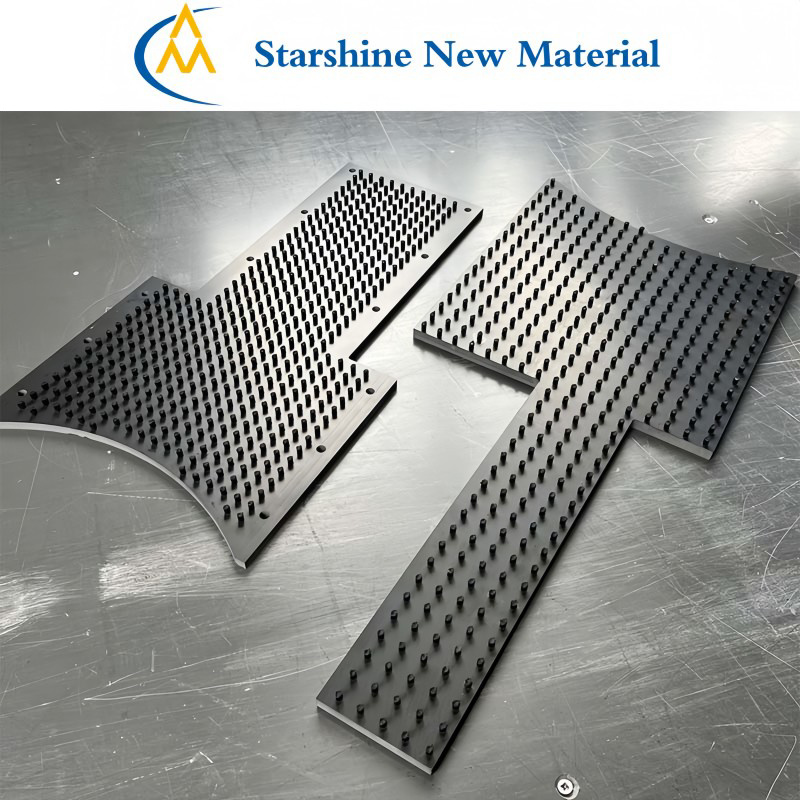
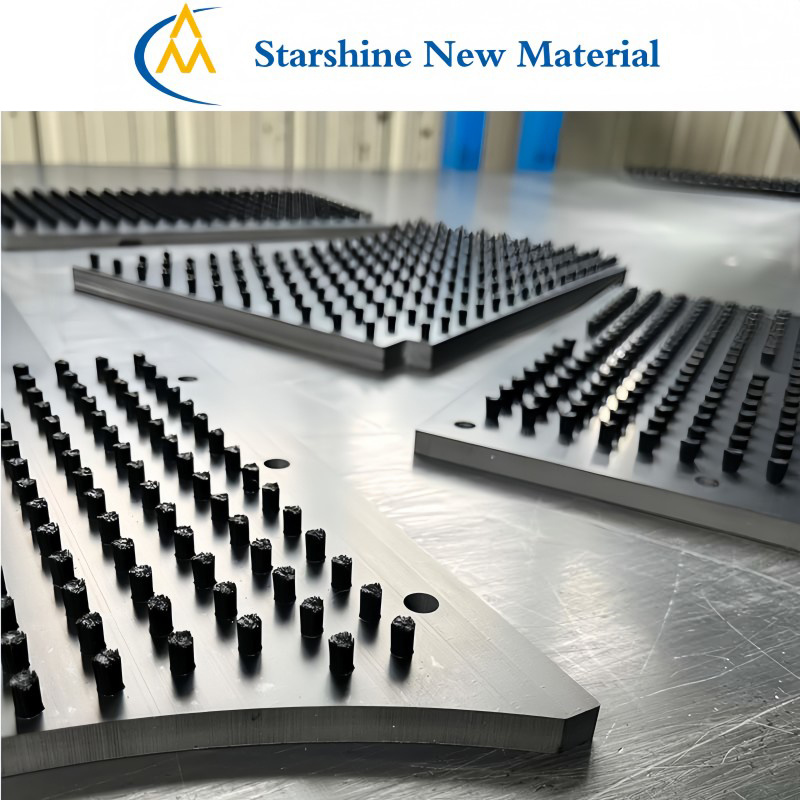
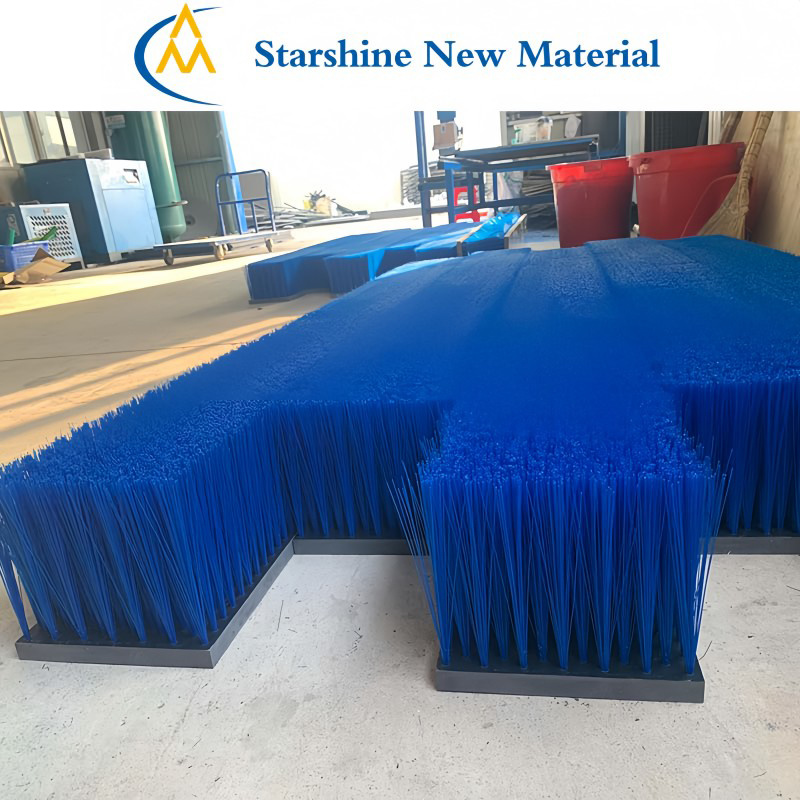
- Brush Body Molding: The brush body base is made of materials such as aluminum discs, epoxy resin boards, or PVC boards according to application scenarios, ensuring a balance between light weight and high strength. Thread polishing brushes need to adopt a spiral wire-planting layout to ensure perfect fit with thread grooves; side sanding brushes need to optimize the density and arrangement angle of brush wires to improve the uniformity of abrasive contact on the side. After molding, the brush body must undergo welding reinforcement or stamping treatment to prevent structural loosening during high-speed operation.
- Wire Planting and Post-treatment: CNC hair-planting machines are used for precise wire planting, with strict control over the depth and density of wire planting to ensure the firmness of the brush wires—high-quality products should have no brush wire shedding during operation. For precision products such as thread polishing brushes, manual trimming of the brush wire shape is required to ensure the spiral curvature matches the thread; all products must undergo wear testing and balance testing to ensure stable operation at a working speed of 800-2500 rpm.
Common misunderstandings in production should be avoided: blindly increasing the wire diameter will reduce the density and fatigue resistance of the brush wires, increasing the risk of wire breakage; excessively lengthening the brush wires will double the stress at the root, causing deformation and breakage; selecting overly coarse abrasive particles will accelerate the wear of the brush wires themselves, thereby shortening the service life instead.
3. Product Classification and Struc
- Commodity name: Abrasive Wire Brush Series
- Description
-
Abrasive Wire Brush Series: Production Analysis and Diversified Applications
Brushes such as abrasive brushes, thread polishing brushes, and side sanding brushes all take abrasive wire as their core functional carrier, serving as key tools for surface finishing in industrial manufacturing. By precisely integrating abrasive particles with polymer materials and combining targeted structural design, these products achieve composite functions such as deburring, polishing, and sanding, and are widely applicable to precision processing needs in various fields including machinery, automotive, and electronics. The strict control over material proportioning and process precision during their production directly determines the abrasive efficiency and service life of the products.I. Core Product Characteristics and Production Key Points
The core competitiveness of the abrasive wire brush series stems from the R&D of high-quality abrasive wires and refined production processes. Different types of brushes are adapted to specific processing scenarios through differentiated structural designs.1. Core Material: The Technical Core of Abrasive Wire
Abrasive wire is the foundation for realizing the product's functions. Essentially, it is a special functional wire made by uniformly dispersing abrasive particles such as silicon carbide (SiC), aluminum oxide (AO), and diamond in a nano-modified nylon base material at a content of 15%-30%, followed by melt spinning. The selection of the base material directly determines the product performance: PA610 abrasive wire has low water absorption, good resilience, and high cost-effectiveness, making it suitable for general scenarios such as stone brushes and PCB brush rollers; PA612, with its superior fatigue resistance and low water absorption, has become the first choice for high-precision processing with high automation and added value; while PA6 material is relatively soft, suitable for flexible dry grinding conditions.The selection of abrasive particles should match the processing requirements: coarse-mesh (36#-80#) silicon carbide abrasive wires have strong cutting force, suitable for heavy rust removal and deburring; fine-mesh (400#-1000#) aluminum oxide abrasive wires are suitable for precision polishing, enabling matte or high-gloss surface effects. High-quality abrasive wires must meet the standards of non-shedding abrasive particles, good bending recovery, and maintaining high hardness and toughness in both dry and wet environments.2. Production Process: Precision Control from Wire Material to Finished Product
The production of the product involves multiple core processes, and each step must be strictly controlled to ensure quality:Abrasive Wire Preparation: The solid-liquid uniform blending technology is adopted to fully integrate abrasive particles with nylon base material. By precisely controlling the spinning temperature and speed, the uniform distribution of abrasive particles in the wire is ensured, avoiding uneven local abrasive force. The wire diameter is controlled within the range of 0.3-2.0mm. Experiments have shown that under the premise of meeting hardness requirements, finer wire diameters (such as 1.2mm) have 50% lower wear loss than coarse wire diameters (such as 1.4mm) and better fatigue resistance.Brush Body Molding: The brush body base is made of materials such as aluminum discs, epoxy resin boards, or PVC boards according to application scenarios, ensuring a balance between light weight and high strength. Thread polishing brushes need to adopt a spiral wire-planting layout to ensure perfect fit with thread grooves; side sanding brushes need to optimize the density and arrangement angle of brush wires to improve the uniformity of abrasive contact on the side. After molding, the brush body must undergo welding reinforcement or stamping treatment to prevent structural loosening during high-speed operation.Wire Planting and Post-treatment: CNC hair-planting machines are used for precise wire planting, with strict control over the depth and density of wire planting to ensure the firmness of the brush wires—high-quality products should have no brush wire shedding during operation. For precision products such as thread polishing brushes, manual trimming of the brush wire shape is required to ensure the spiral curvature matches the thread; all products must undergo wear testing and balance testing to ensure stable operation at a working speed of 800-2500 rpm.Common misunderstandings in production should be avoided: blindly increasing the wire diameter will reduce the density and fatigue resistance of the brush wires, increasing the risk of wire breakage; excessively lengthening the brush wires will double the stress at the root, causing deformation and breakage; selecting overly coarse abrasive particles will accelerate the wear of the brush wires themselves, thereby shortening the service life instead.3. Product Classification and Structural Differences
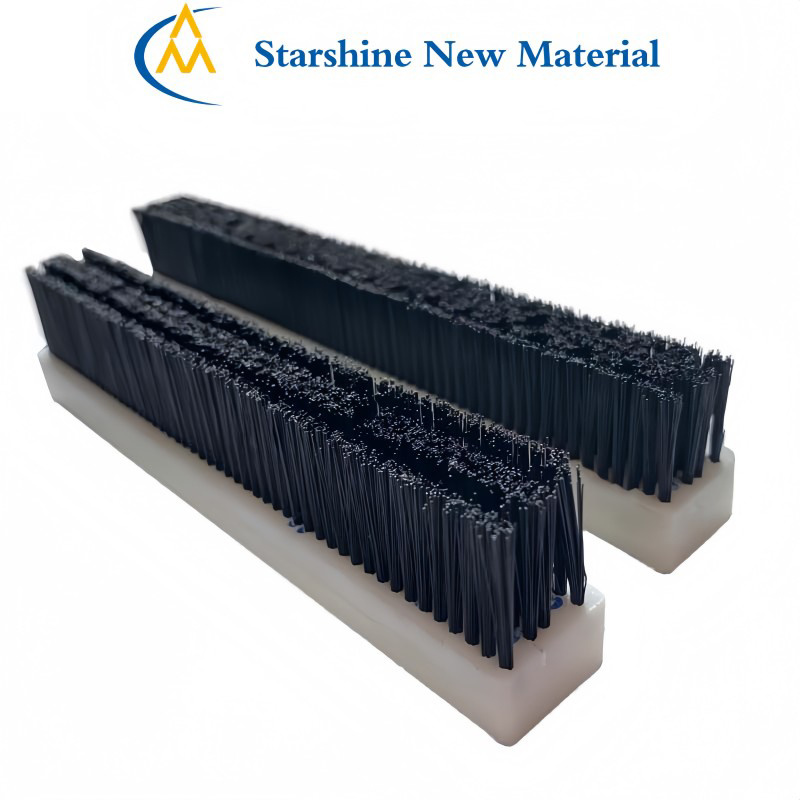
According to the structural requirements of different application scenarios, the series products have clear divisions of labor:General Abrasive Brushes: The brush wires are designed in a wavy bend, with a large contact area, suitable for large-area sanding and rust removal of plates and castings;Thread Polishing Brushes: The brush wires are arranged in a spiral pattern, suitable for threaded parts such as bolts and nuts, which can penetrate into thread grooves to remove burrs and improve surface finish;Side Sanding Brushes: The density of brush wires on the side of the brush body is optimized, focusing on precision sanding of the sides of planes and curved surfaces, such as the end faces of gears and the sides of profiles;Precision Abrasive Wire Brushes: Using fine-mesh abrasive wires (240# and above), suitable for ultra-precision polishing of electronic components and optical parts.II. Multi-Industry Application Scenarios and Value Manifestation
With the core advantages of "precision grinding + low damage", the abrasive wire brush series has penetrated the entire industrial chain from basic processing to precision manufacturing, becoming a key link in improving product quality.1. Machinery Manufacturing and Hardware Processing: Deburring and Precision Improvement
In the processing of mechanical parts, the oxide scale and flash burrs on the surface of castings and forgings directly affect the assembly precision. Thread polishing brushes can specifically handle the thread structures of bolts and lead screws, removing burrs without damaging the thread profile, thus ensuring connection precision; side sanding brushes are used for precision grinding of the end faces of gears and bearings, achieving a processing standard of end face flatness error ≤ 0.02mm by controlling the grinding force.For plates such as cold-rolled plates and galvanized plates, general abrasive brushes can remove the surface oxide layer before processing, providing a clean base for subsequent painting and electroplating; in the treatment of the inner walls of deep holes in hydraulic cylinder liners and compressor parts, customized abrasive wire brushes can penetrate into the holes, realizing simultaneous deburring and roughness optimization of the inner walls.2. Automotive and Aerospace: Precision Component Finishing
In automotive manufacturing, burrs on engine blocks and gearbox parts will aggravate wear and cause abnormal noise. Abrasive wire brushes can precisely remove edge burrs without changing the shape of the parts; for wheel hub surface treatment, fine-mesh aluminum oxide abrasive wire brushes are used, achieving matte or mirror effects through side sanding to enhance the appearance texture.The aerospace field has extremely high requirements for component precision. In the treatment of complex curved surfaces such as aircraft engine blades and hydraulic pipelines, abrasive wire brushes, with their excellent resilience, can perfectly fit the curved surface contours, removing processing marks while ensuring that the aerodynamic performance of the blades is not affected.3. Electronics and Semiconductors: Micro-Precision Surface Treatment
In the production of printed circuit boards (PCBs), oil stains and oxide layers on the copper foil surface will affect circuit conductivity. Brush rollers made of PA610 abrasive wires can complete copper foil decontamination and micro-grinding at low speeds, ensuring subsequent welding quality; for the polishing process of mobile phone glass and semiconductor chips, precision brushes with diamond abrasive wires are selected to achieve ultra-precision treatment with a surface roughness of Ra ≤ 0.01μm.In the deburring treatment of electronic component pins and connectors, fine-diameter abrasive wire brushes can penetrate into the pin gaps, avoiding pin deformation or breakage caused by traditional tools, thus improving product qualification rates.4. Stone and Woodworking Industries: Surface Texture Shaping
In stone processing, abrasive wire brushes can achieve antique finishing or matte effects on the surfaces of marble and granite by adjusting the abrasive mesh and brush wire arrangement—coarse-mesh brush wires create a textured surface, while fine-mesh brush wires achieve a smooth luster. In wood flooring production, side sanding with brush wires can highlight the natural texture of the wood, while removing micro-burrs on the board surface to improve foot feel and coating adhesion.In the treatment of curved surfaces and carved parts of complex furniture, the elastic advantage of abrasive wire brushes is fully exerted, which can fully cover irregular surfaces and avoid dead corners that are difficult to reach with traditional sandpaper.5. Other Special Application Scenarios
In the food machinery industry, acid and alkali resistant PA612 abrasive wire brushes can clean residual dirt on equipment conveyor belts and stirring paddles, with no risk of brush wire shedding, meeting food hygiene standards; in jewelry processing, fine-mesh silicon carbide abrasive wire brushes are used for polishing precious metal jewelry, creating a mirror luster while protecting the details of the patterns.III. Product Selection and Summary of Core Advantages
The selection of abrasive wire brush series products should follow the principle of "material matching + parameter adaptation": for rough metal processing, coarse-mesh silicon carbide brush wires are preferred; for precision polishing, fine-mesh aluminum oxide or diamond brush wires are selected; for wet working conditions, PA610 and PA612 materials are preferred to avoid brush wire softening due to water absorption.Compared with traditional sanding tools, this series of products has three core advantages: first, strong adaptability, which can handle complex structures such as planes, threads, and curved surfaces, and reach areas that are difficult for traditional tools to access; second, high controllability, which can cover the entire process from rough grinding to fine polishing by adjusting the abrasive mesh and rotation speed; third, good durability, the wear resistance of high-quality abrasive wires makes their service life 3-5 times longer than ordinary nylon brushes, reducing the unit processing cost.With the development of industrial manufacturing towards precision and automation, the abrasive wire brush series is continuously adapting to more high-end processing scenarios through material innovation and process upgrading, becoming a key supporting tool for improving product quality.
Message
Please provide the following valid information, and we will contact you as soon as possible.
Mobile:
Wechat/Whatsapp:
E-mail:
Address:
No. 123 Yuantan Avenue, Yuantan Town, Anqing City, Anhui Province, China


Online Message
If you have any product related questions, please feel free to contact us!
Copyright © 2025 Starshine New Materials Technology Co., Ltd.
Business License