


PRODUCTS
PRODUCTS

Sanding Brushes (Roller Brushes)
A sanding brush is a surface treatment tool that combines the flexible grinding of bristles with the cutting force of sand particles. Usually, diamond or aluminum oxide particles are embedded in nylon or wire bristles to form a composite brush head with both grinding and polishing functions.
- Commodity name: Sanding Brushes (Roller Brushes)
- Description
-
Introduction and Application Instructions of Sanding Brushes
A sanding brush is a type of composite surface treatment tool that combines the "flexible operation of the brush body" and "abrasive grinding properties". By implanting or attaching abrasive particles into the brush filament matrix, it realizes operations such as grinding, deburring, edge trimming, wire drawing, and fine polishing on the workpiece surface through the rotation or reciprocating movement of the brush body. Compared with traditional rigid sanding equipment (such as grinders and sandpaper machines), sanding brushes have stronger curved surface adaptability, which can fit complex structural surfaces such as special shapes, curved surfaces, and gaps. At the same time, they avoid workpiece damage caused by over-grinding, and are widely used in wood processing, metal manufacturing, composite material processing and other fields.I. Core Product Attributes
1.1 Basic Structure and Core Components
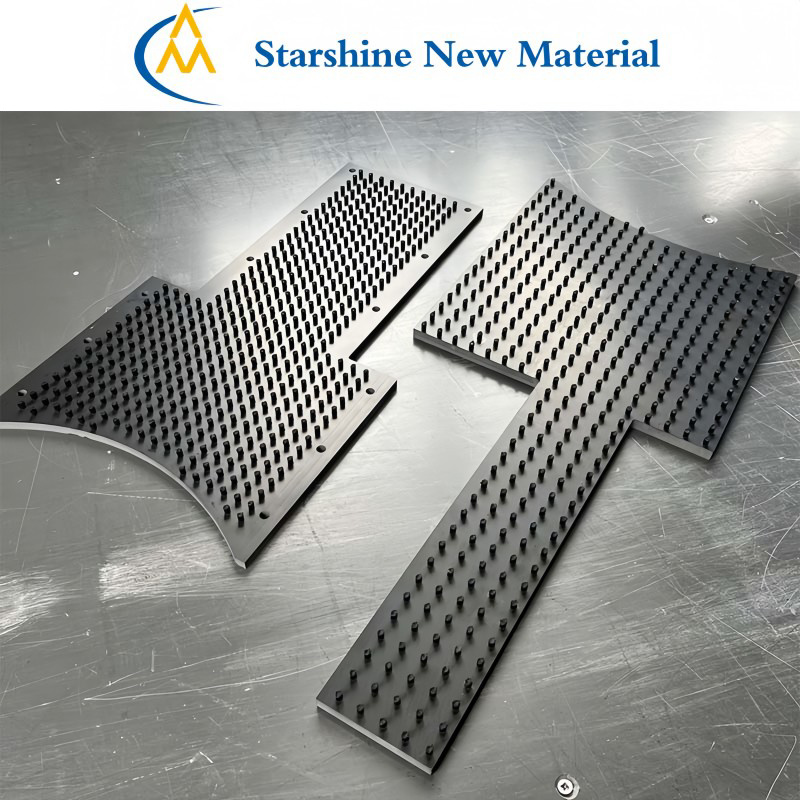
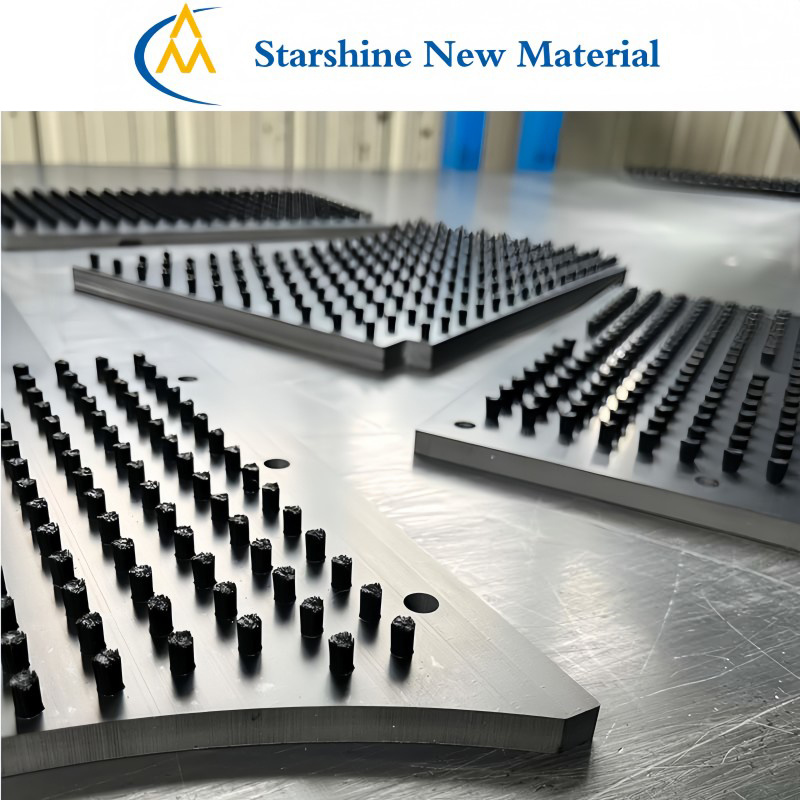
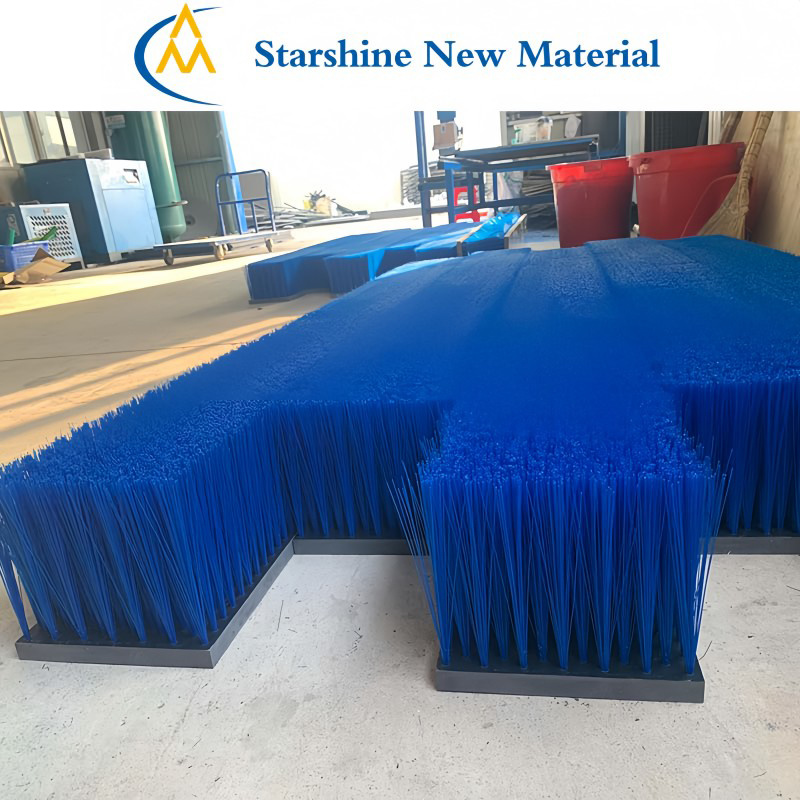
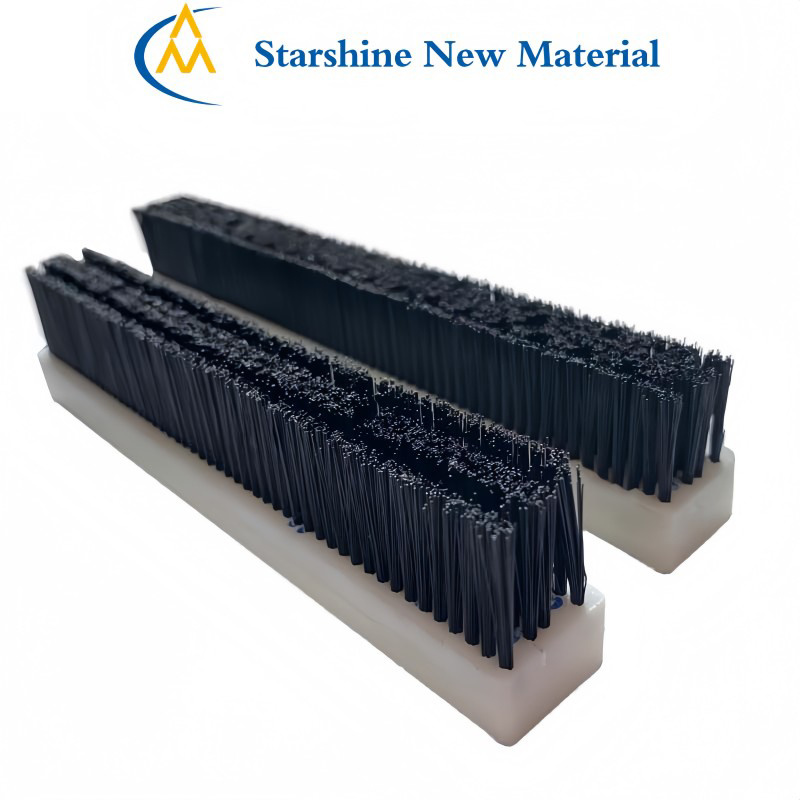
The performance of a sanding brush is jointly determined by three core components: "brush carrier + brush filament matrix + abrasive particles". The material and process selection of each part directly affects the operation efficiency, precision and service life:Brush Carrier: As a supporting structure, it needs to match the operation intensity and equipment installation requirements. Common forms include roller type (suitable for automated production lines to achieve continuous sanding), disc type (suitable for hand-held tools for local fine processing), strip brush type (suitable for gap grinding of special-shaped workpieces) and cup type (suitable for angle grinders for curved surface grinding). The carrier materials are mostly high-strength plastics (such as PA66), aluminum alloys or seamless steel pipes. The surface is processed by grooving and hole planting to ensure the brush filaments are firmly fixed.Brush Filament Matrix: It undertakes the functions of carrying abrasive particles and buffering during operation, and needs to have both rigidity and elasticity. The mainstream materials are divided into three categories: first, nylon filaments (good elasticity, wear-resistant, suitable for soft materials and fine sanding); second, polyester filaments (higher hardness than nylon, anti-aging, suitable for medium-load sanding); third, metal filaments (such as stainless steel wires, copper wires, high rigidity, suitable for heavy-duty metal sanding, often used in combination with abrasives). The diameter of the brush filament is usually between 0.1mm and 1.5mm, which can be adjusted according to the sanding intensity.Abrasive Particles: The core sanding component, which is attached to the surface of the brush filament or embedded in the brush filament through processes such as electrostatic sand planting and resin bonding. The material and mesh size of the particles determine the sanding precision. Common abrasives include alumina (brown corundum, low cost, suitable for rough grinding of ordinary metals and wood), silicon carbide (high hardness, wear-resistant, suitable for sanding of stone, glass and hard alloys), and diamond (super hard, suitable for fine grinding of super hard materials such as ceramics and sapphires). The mesh size ranges from 40 meshes (rough grinding to remove thickness) to 1000 meshes (fine polishing). The higher the mesh size, the smoother the sanded surface.1.2 Product Classification and Core Characteristics
According to the operation form and application scenario, sanding brushes can be divided into four categories, and the characteristics and applicable scenarios of various products are significantly different:Product TypeCore StructurePerformance CharacteristicsApplicable ScenariosRoller-type Sanding BrushCylindrical carrier + dense bristle planting + uniform sand plantingLarge operation area, high continuous efficiency, good sanding uniformityLarge-area continuous sanding of wood boards, metal coils, PVC boards, etc.Disc-type Sanding BrushDisc-shaped carrier + radial bristle planting + annular sand plantingStrong flexibility, multi-angle operation, suitable for hand-held equipmentLocal sanding of furniture corners, hardware accessories, auto parts, etc.Special-shaped Sanding BrushCustomized carrier (such as arc, U-shape) + adaptive brush filamentsExtremely high fit, can go deep into complex gaps and curved surfacesSanding of special-shaped structures such as gear tooth surfaces, pipe inner walls, and mold cavitiesFine Polishing BrushUltra-fine brush filaments + high-mesh abrasives (800 meshes and above)High sanding precision, low surface roughness, no scratchesSurface polishing of jewelry, electronic components, precision instruments1.3 Core Advantages
Compared with traditional sanding tools, the core competitiveness of sanding brushes is reflected in "flexible adaptation + precise control", and the specific advantages include:Strong curved surface adaptability: The elasticity of the brush filaments enables the abrasive particles to closely fit the workpiece surface. Whether it is a curved surface, a spherical surface or an uneven structure, uniform sanding can be achieved, solving the "missing grinding" problem of traditional rigid sanding tools.Controllable sanding precision: By adjusting the brush filament hardness, abrasive mesh size and operation speed, the whole process from rough grinding and deburring to fine grinding and polishing can be realized, avoiding the disadvantage that a single tool cannot balance precision and efficiency.Good workpiece protection: The flexible brush filaments form a buffer during operation, which can effectively avoid workpiece size deviation or surface scratches caused by over-grinding, and is especially suitable for fragile workpieces such as thin-walled parts and soft materials.High operation efficiency: Dense brush filaments and abrasive particles can form multi-contact simultaneous operation. The roller-type sanding brush can realize continuous operation of 10-50 meters per minute with the production line, which is far higher than manual sanding efficiency.II. Main Application Scenarios
The application scenarios of sanding brushes are deeply bound to the workpiece material and surface treatment requirements, covering multiple industrial fields and some civil scenarios. Among them, wood processing and metal manufacturing are the core application directions:2.1 Wood Processing Industry
Wood surface treatment has high requirements for "smoothness + texture protection", and sanding brushes are the core tools to replace traditional sandpaper, mainly used in:Solid Wood Furniture Production: Roller-type sanding brushes with nylon filaments and alumina abrasives are used for pre-treatment of solid wood boards to remove surface burrs, knots and mechanical processing marks; after furniture assembly, disc-type sanding brushes are used for fine sanding of corners and joints to ensure the surface is flat and free of edges; for high-end woods such as redwood and walnut, high-mesh fine polishing brushes are used to highlight the natural texture of the wood while improving the touch.Artificial Board Processing: In the production of particleboard and MDF (Medium Density Fiberboard), sanding brushes are used to remove wood chips and glue stains on the board surface to prepare for subsequent veneering and coating; for surface wire drawing treatment of ecological boards and wood-plastic boards, sanding brushes with customized mesh sizes are used to form uniform wood-grain wire drawing effects and improve product aesthetics.Door, Window and Floor Manufacturing: For the profile surface of solid wood doors and windows, strip brush-type sanding brushes are used to go deep into the profile grooves for sanding to avoid missing grinding; in the wood floor production line, multiple sets of roller-type sanding brushes with different mesh sizes operate continuously, realizing rough grinding to fine grinding in one step, ensuring that the flatness error of the floor surface is less than 0.1mm.2.2 Metal Manufacturing Industry
Metal sanding needs to balance "defect removal" and "surface pre-treatment". Sanding brushes are selected according to the differences in metal materials (stainless steel, aluminum alloy, carbon steel, etc.), and their applications include:Hardware Accessory Processing: For stamped parts such as bolts, nuts and hinges, metal wire composite sanding brushes are used to remove surface oxide scales and stamping burrs; in the production of stainless steel tableware, coarse-mesh sanding brushes are first used to remove surface scratches, and then fine-mesh polishing brushes are used for mirror treatment to improve product texture.Automotive and Rail Transit: For the edge burrs of auto body stamped parts, flexible nylon sanding brushes are used to avoid damaging the auto body paint; for the surface of aluminum alloy profiles of rail transit vehicles, silicon carbide sanding brushes are used for roughening treatment to enhance coating adhesion; for precision sanding of engine parts (such as gears and pistons), special-shaped sanding brushes are used to go deep into the tooth surfaces and oil passage gaps to ensure the surface smoothness meets the assembly requirements.Steel Structure and Pipeline: For the welding joints of large steel structures, disc-type sanding brushes are used to remove welding slag and spatter to prepare for anti-corrosion coating; for the surface treatment of galvanized pipes, acid and alkali resistant sanding brushes are used to remove surface zinc layer defects while avoiding over-grinding to damage the galvanized layer.2.3 Composite Material and Special Material Industry
For hard and brittle materials such as glass, ceramics and stone, and soft materials such as plastics and leather, sanding brushes achieve precise sanding through material customization, and their applications include:Stone and Ceramic Processing: For the surface polishing of marble and granite, diamond sanding brushes are used, combined with a water cooling system to achieve a mirror polishing effect; for the anti-slip treatment of ceramic tiles, coarse-mesh sanding brushes are used to form uniform anti-slip lines on the tile surface to improve the anti-slip grade of the tiles.Plastic and Composite Materials: For the surface of PVC pipes and ABS plastic parts, nylon sanding brushes are used to remove injection flashes and surface shrinkage marks; for the surface pre-treatment of carbon fiber composite materials, anti-static sanding brushes are used to remove surface dust and resin residues to ensure subsequent bonding strength.Leather and Textile Accessories: For the surface napping treatment of artificial leather and synthetic leather, ultra-fine brush filament sanding brushes are used to form a fluff texture similar to natural leather; for the surface cleaning of metal textile yarns, soft sanding brushes are used to remove metal debris on the yarn surface to improve the quality of textile products.2.4 Civil and Precision Manufacturing Fields
Jewelry Processing: For the surface polishing of gold and silver jewelry, high-mesh diamond sanding brushes are used to achieve a scratch-free mirror effect; for the grinding of jade and jadeite, flexible brush filaments combined with fine abrasives are used to protect the natural texture of the jade.Electronics and Precision Instruments: For the aluminum alloy frames of mobile phone casings and computer keyboards, fine sanding brushes are used for wire drawing treatment to improve product aesthetics; for the packaging casings of semiconductor chips, anti-static sanding brushes are used to remove surface dust to avoid electrostatic damage to the chips.Home Cleaning and Maintenance: For daily cleaning and minor scratch repair of stone countertops and glass curtain walls, small hand-held sanding brushes are used, combined with special abrasive paste, to achieve dual effects of cleaning and repair.III. Selection and Usage Notes
3.1 Core Selection Factors
Workpiece material: For soft materials (wood, plastic), nylon/polyester brush filaments are preferred; for hard materials (metal, stone), metal wires or composite brush filaments are selected; for super hard materials (ceramics, sapphires), diamond abrasives are selected.Operation requirements: 40-120 mesh abrasives are selected for rough grinding and deburring, more than 500 mesh abrasives for fine polishing, and 180-320 mesh abrasives for wire drawing treatment.Equipment type: Automated production lines are suitable for roller-type sanding brushes, hand-held tools are suitable for disc/cup-type sanding brushes, and special-shaped workpieces are suitable for customized special-shaped sanding brushes.3.2 Usage Notes
Control the operation pressure: Avoid brush filament deformation or workpiece surface damage caused by excessive pressure. It is recommended to control the pressure at 0.1-0.3MPa (for pneumatic equipment).Reasonably match the rotational speed: The recommended rotational speed for wood sanding is 800-1500r/min, and for metal sanding is 1500-3000r/min. Excessively high rotational speed may easily cause abrasive detachment.Regular maintenance and replacement: When the brush filament wear exceeds 30% or the abrasive particles fall off obviously, the sanding brush should be replaced in time to ensure stable sanding effect.
Message
Please provide the following valid information, and we will contact you as soon as possible.
Mobile:
Wechat/Whatsapp:
E-mail:
Address:
No. 123 Yuantan Avenue, Yuantan Town, Anqing City, Anhui Province, China


Online Message
If you have any product related questions, please feel free to contact us!
Copyright © 2025 Starshine New Materials Technology Co., Ltd.
Business License