


PRODUCTS
PRODUCTS

Steel Wire Sweeping Brush
Steel Wire Road Sweeping Brush: Specialized Ground Cleaning Tool for Municipal Sanitation and Industrial Cleaning
The steel wire road sweeping brush is a rigid cleaning tool specially designed for large-scale ground cleaning. With high-strength steel wires as its core cleaning unit, it adapts to road sweepers, cleaning robots and other equipment through a wheel-type or roller-brush structure. Relying on mechanical power, it efficiently cleans various types of garbage such as gravel, iron filings, oil stains, fallen leaves and accumulated dust in scenarios including road surfaces, factory areas and stations. By virtue of the rigid cutting force of steel wires and the cleaning coverage of dense arrangement, it solves the pain points of ordinary bristle brushes, such as "being unable to clean stubborn impurities thoroughly and being easy to wear". It has become a core equipment for ground cleaning in fields like municipal sanitation, industrial manufacturing and logistics warehousing, and is compatible with various ground materials including asphalt, cement, steel plates and stone.
I. Core Product Introduction
The core design logic of the steel wire road sweeping brush is "mechanical power adaptation + rigid cleaning enhancement" — it improves cleaning efficiency by optimizing the material and arrangement of steel wires, and adapts to various cleaning equipment with a standardized structure, achieving the dual goals of "large-area rapid cleaning + thorough removal of stubborn impurities" while balancing tool service life and ground protection.
(1) Core Structure and Classification Characteristics
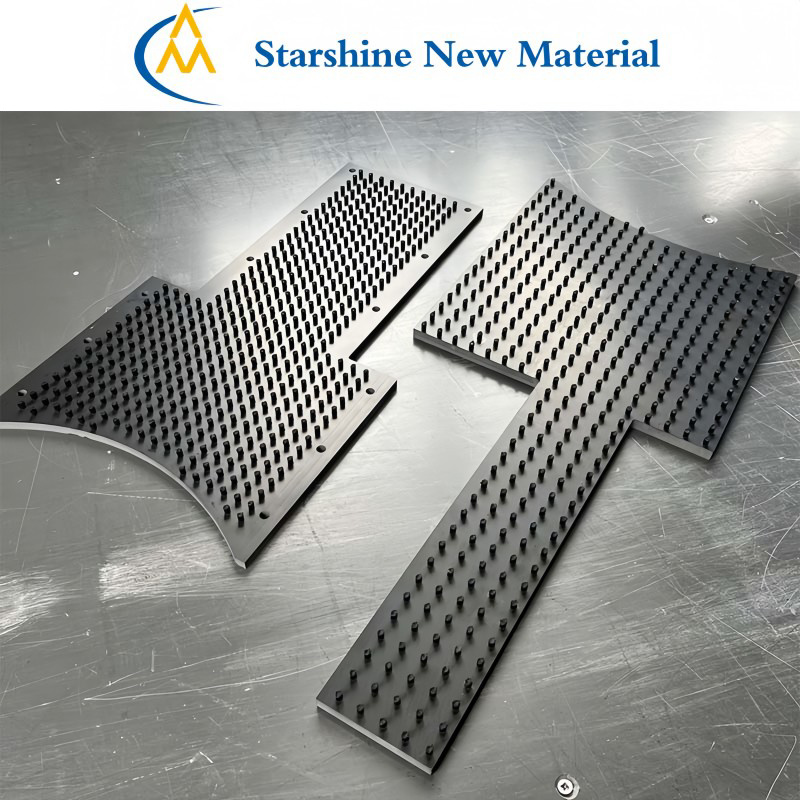
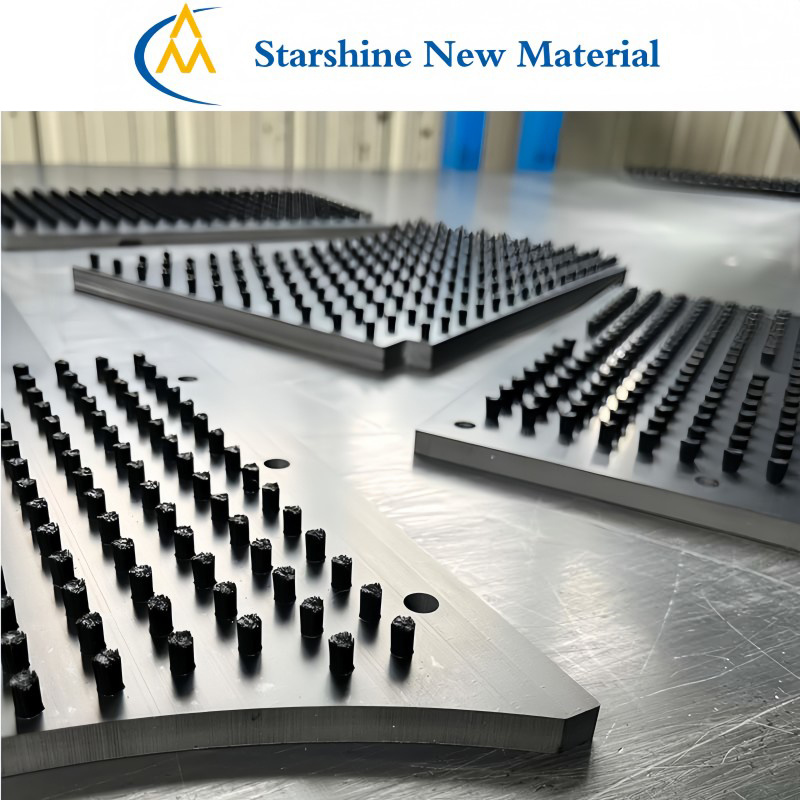
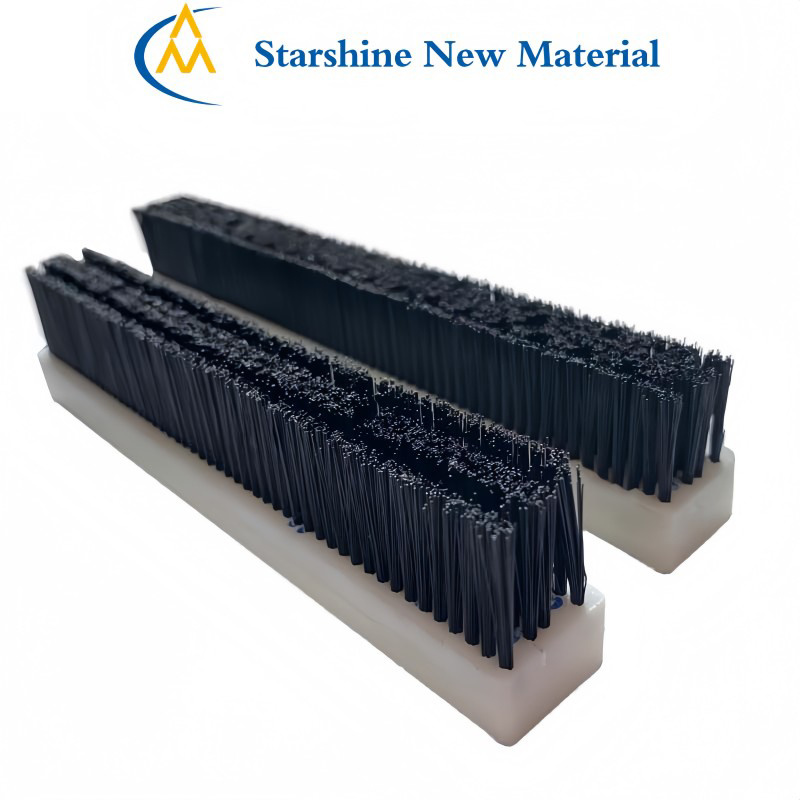
The product is mainly composed of three parts: "steel wire cleaning layer + high-strength base + equipment connection structure". According to the type of cleaning equipment and application scenario requirements, it can be subdivided into multiple categories, covering the full-scenario adaptation from small hand-pushed equipment to large road sweepers.
1. Analysis of Core Components:
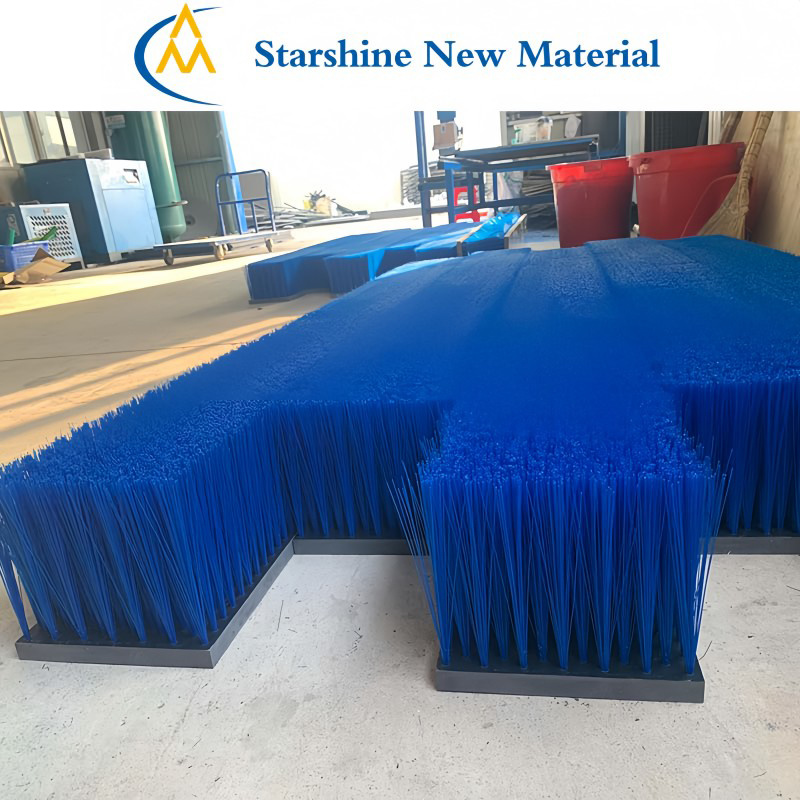
- Steel Wire Cleaning Layer: The core is high-carbon steel wire (carbon content 0.7%-1.0%) or stainless steel wire, with a customizable wire diameter of 0.3mm-1.2mm — thick wires (0.8mm-1.2mm) are suitable for heavy impurities such as gravel and iron filings, while fine wires (0.3mm-0.6mm) are suitable for light garbage such as accumulated dust and fallen leaves. After quenching, the hardness of the steel wire reaches HRC52-HRC58, and the single-wire bending strength is ≥150MPa; dense spiral or radial wire planting is adopted, with a wire planting density of 30-80 wires/cm², ensuring no missed cleaning blind spots during cleaning. The connection between steel wires and the base adopts the "cold pressing + resin fixing" process, with a shedding rate of ≤0.05%.
- Base Structure: Small brush bodies (adapted to hand-pushed sweepers) adopt engineering plastic (ABS + glass fiber) bases, with a diameter of 100mm-300mm; large brush bodies (adapted to municipal road sweepers) adopt steel plate or aluminum alloy bases, with a diameter of 300mm-800mm and a length of 500mm-2000mm. The base surface is treated with anti-rust coating, with salt spray corrosion resistance ≥500 hours, suitable for outdoor humid environments.
- Connection Structure: Equipped with standardized interfaces such as flange plates, keyways and quick-release buckles, it can be directly adapted to small hand-pushed sweepers, medium-sized electric road sweepers, large fuel-powered road sweepers and industrial cleaning robots. The applicable speed range is 100-1000rpm, meeting different cleaning speed requirements.
2. Main Product Classification:
- Classified by Installation Method: Disc-type steel wire road sweeping brush (installed on the side of road sweepers, responsible for cleaning curbs and corners, diameter 200mm-400mm), roller-brush type steel wire road sweeping brush (installed at the bottom of equipment, responsible for large-area cleaning of main road surfaces, length matching the equipment width), hand-pushed steel wire brush (miniaturized design, suitable for cleaning residential areas and workshop corners).
- Classified by Steel Wire Type: High-carbon steel wire road sweeping brush (cost-effective, suitable for cleaning heavy impurities on ordinary ground, service life up to 800-1200 hours), stainless steel wire road sweeping brush (acid and alkali corrosion resistant, suitable for humid and corrosive environments such as chemical plants and coastal ports, service life increased by 50%), mixed-wire road sweeping brush (combination of steel wire and nylon wire, balancing stubborn impurity cleaning and ground protection, suitable for scratch-prone ground in scenic spots and shopping malls).
- Classified by Specialized Scenarios: Municipal-specific road sweeping brush (large-diameter and wide-width design, suitable for urban main roads), factory-specific road sweeping brush (oil-resistant and wear-resistant, suitable for machinery factories and iron and st
- Commodity name: Steel Wire Sweeping Brush
- Description
-
Steel Wire Road Sweeping Brush: Specialized Ground Cleaning Tool for Municipal Sanitation and Industrial Cleaning
The steel wire road sweeping brush is a rigid cleaning tool specially designed for large-scale ground cleaning. With high-strength steel wires as its core cleaning unit, it adapts to road sweepers, cleaning robots and other equipment through a wheel-type or roller-brush structure. Relying on mechanical power, it efficiently cleans various types of garbage such as gravel, iron filings, oil stains, fallen leaves and accumulated dust in scenarios including road surfaces, factory areas and stations. By virtue of the rigid cutting force of steel wires and the cleaning coverage of dense arrangement, it solves the pain points of ordinary bristle brushes, such as "being unable to clean stubborn impurities thoroughly and being easy to wear". It has become a core equipment for ground cleaning in fields like municipal sanitation, industrial manufacturing and logistics warehousing, and is compatible with various ground materials including asphalt, cement, steel plates and stone.I. Core Product Introduction
The core design logic of the steel wire road sweeping brush is "mechanical power adaptation + rigid cleaning enhancement" — it improves cleaning efficiency by optimizing the material and arrangement of steel wires, and adapts to various cleaning equipment with a standardized structure, achieving the dual goals of "large-area rapid cleaning + thorough removal of stubborn impurities" while balancing tool service life and ground protection.(1) Core Structure and Classification Characteristics
The product is mainly composed of three parts: "steel wire cleaning layer + high-strength base + equipment connection structure". According to the type of cleaning equipment and application scenario requirements, it can be subdivided into multiple categories, covering the full-scenario adaptation from small hand-pushed equipment to large road sweepers.1. Analysis of Core Components:Steel Wire Cleaning Layer: The core is high-carbon steel wire (carbon content 0.7%-1.0%) or stainless steel wire, with a customizable wire diameter of 0.3mm-1.2mm — thick wires (0.8mm-1.2mm) are suitable for heavy impurities such as gravel and iron filings, while fine wires (0.3mm-0.6mm) are suitable for light garbage such as accumulated dust and fallen leaves. After quenching, the hardness of the steel wire reaches HRC52-HRC58, and the single-wire bending strength is ≥150MPa; dense spiral or radial wire planting is adopted, with a wire planting density of 30-80 wires/cm², ensuring no missed cleaning blind spots during cleaning. The connection between steel wires and the base adopts the "cold pressing + resin fixing" process, with a shedding rate of ≤0.05%.Base Structure: Small brush bodies (adapted to hand-pushed sweepers) adopt engineering plastic (ABS + glass fiber) bases, with a diameter of 100mm-300mm; large brush bodies (adapted to municipal road sweepers) adopt steel plate or aluminum alloy bases, with a diameter of 300mm-800mm and a length of 500mm-2000mm. The base surface is treated with anti-rust coating, with salt spray corrosion resistance ≥500 hours, suitable for outdoor humid environments.Connection Structure: Equipped with standardized interfaces such as flange plates, keyways and quick-release buckles, it can be directly adapted to small hand-pushed sweepers, medium-sized electric road sweepers, large fuel-powered road sweepers and industrial cleaning robots. The applicable speed range is 100-1000rpm, meeting different cleaning speed requirements.2. Main Product Classification:Classified by Installation Method: Disc-type steel wire road sweeping brush (installed on the side of road sweepers, responsible for cleaning curbs and corners, diameter 200mm-400mm), roller-brush type steel wire road sweeping brush (installed at the bottom of equipment, responsible for large-area cleaning of main road surfaces, length matching the equipment width), hand-pushed steel wire brush (miniaturized design, suitable for cleaning residential areas and workshop corners).Classified by Steel Wire Type: High-carbon steel wire road sweeping brush (cost-effective, suitable for cleaning heavy impurities on ordinary ground, service life up to 800-1200 hours), stainless steel wire road sweeping brush (acid and alkali corrosion resistant, suitable for humid and corrosive environments such as chemical plants and coastal ports, service life increased by 50%), mixed-wire road sweeping brush (combination of steel wire and nylon wire, balancing stubborn impurity cleaning and ground protection, suitable for scratch-prone ground in scenic spots and shopping malls).Classified by Specialized Scenarios: Municipal-specific road sweeping brush (large-diameter and wide-width design, suitable for urban main roads), factory-specific road sweeping brush (oil-resistant and wear-resistant, suitable for machinery factories and iron and steel plants), warehousing-specific road sweeping brush (low-noise and miniaturized, suitable for logistics warehouses and workshop passages).(2) Core Performance Advantages
1. Rigid Cleaning, Thorough Removal of Stubborn Impurities: High-hardness steel wires can directly peel off oil stains, rust and cement agglomerates attached to the ground. The cleaning rate of impurities such as gravel, iron filings and bolts with particle sizes of 0.1mm-50mm is over 98%, solving the problem that ordinary bristle brushes "cannot push or clean thoroughly", and is especially suitable for ground cleaning in industrial factories.2. Super Wear Resistance, Reducing Usage Costs: The wear resistance of high-carbon steel wires is 10-15 times that of ordinary nylon brushes. A single large roller-brush type road sweeping brush can continuously clean more than 1000 kilometers of municipal roads or handle more than 5000 square meters of industrial ground; the service life of stainless steel wires in corrosive environments is 60% longer than that of ordinary steel wires, reducing labor and material costs caused by frequent replacement.3. Full-Scenario Adaptation, No Cleaning Blind Spots: Disc-type brushes can reach dead corners such as curb gaps and manhole covers; roller-brush type brushes cover the main road surface without omission; hand-pushed brushes are suitable for narrow spaces; the length of steel wires can be customized (100mm-300mm), which can adapt to uneven and damaged road surfaces, avoiding "missed cleaning on protrusions and brush jamming in depressions".4. Safe and Reliable, Balancing Ground Protection: The ends of the steel wires are rounded to avoid scratching conventional ground such as asphalt and cement; the mixed-wire model uses nylon wires for buffering, which can be safely adapted to scratch-prone ground such as stone and epoxy floors while retaining the cleaning power of steel wires, suitable for scenarios with high ground requirements such as shopping malls and hospitals.5. Adapting to Mechanical Operation, Efficiency Multiplied: When used with large road sweepers, it can clean 3000-10000 square meters of ground per hour, which is 20-50 times the efficiency of manual cleaning, fully meeting the policy requirement of "improving the mechanized cleaning rate" in municipal sanitation.II. Core Application Scenarios
With the core advantage of "large-area and high-intensity cleaning", the steel wire road sweeping brush covers multiple fields such as municipal administration, industry and logistics, and has become an irreplaceable key tool in the ground cleaning process.(1) Municipal Sanitation Field
1. Cleaning of Urban Arterial and Secondary Roads: Large road sweepers are equipped with roller-brush type high-carbon steel wire road sweeping brushes to efficiently clean gravel, fallen leaves, dust and cargo residues scattered by vehicles on the road surface. Combined with dust suction devices, they realize the integration of "cleaning + dust removal". Especially in the rainy season, they can quickly remove road sludge and improve driving safety.2. Cleaning of Urban-Rural Fringes and Villages in Cities: Aiming at the complex composition of garbage in this area (including construction waste and domestic waste), thick-wire steel wire road sweeping brushes are used to remove heavy impurities such as bricks and tiles, reducing the clogging risk of ordinary cleaning equipment; disc-type brushes focus on cleaning accumulated dust and debris in curb gaps to improve environmental cleanliness.3. Supporting Cleaning for Municipal Engineering: Cement debris and asphalt agglomerates remaining after road reconstruction are thoroughly cleaned with high-strength steel wire road sweeping brushes to prepare for subsequent road marking construction; sludge and debris around manholes after sewer dredging are cleaned with small hand-pushed steel wire brushes to avoid secondary clogging.(2) Industrial Manufacturing and Factory Area Field
1. Machinery and Iron & Steel Factories: Iron filings, waste bolts and oil stains on the workshop ground of machinery factories, and scale and steel slag in the factory area of iron and steel plants are cleaned with stainless steel wire road sweeping brushes combined with industrial sweepers to prevent impurities from scratching equipment or causing personnel to slip; mixed-wire road sweeping brushes are used in workshop passages to protect the epoxy floor while removing metal debris left by machine tools.2. Chemical and Food Factories: For acid-alkali residues and material dust on the ground of chemical factories, corrosion-resistant stainless steel wire road sweeping brushes are selected to avoid steel wire rusting and ground pollution; for raw material residues in food processing factories (such as chaff from grain processing and debris from meat processing), hygienic stainless steel wire road sweeping brushes are used for cleaning, complying with the cleaning standards of the food industry.3. Industrial Parks and Factory Perimeters: Cargo scattered by transport vehicles (such as coal, ore and building materials) on the main roads of industrial parks is quickly cleaned with thick-wire roller-brush type road sweeping brushes to avoid material accumulation affecting traffic; fallen leaves and dust around factories are maintained daily with electric road sweepers to reduce labor costs.(3) Logistics Warehousing and Transportation Station Field
1. Logistics Warehouses and Freight Terminals: Pallet debris, packing belts and cargo packaging residues on the ground of logistics warehouses are cleaned with hand-pushed or small electric sweepers combined with steel wire brushes to ensure the driving safety of forklifts; in the container loading and unloading areas of freight terminals, large road sweeping brushes are used to remove scattered goods (such as ore, grain and chemical fertilizers) to avoid mixing and pollution.2. Airports and High-Speed Railway Stations: Gravel and foreign objects beside airport runways (which may cause the risk of being sucked into aircraft engines) are accurately cleaned with special fine-diameter steel wire road sweeping brushes; fallen leaves and debris left by passengers on the squares of high-speed railway stations are cleaned with mixed-wire road sweeping brushes to protect the stone ground while ensuring the cleaning effect.3. Parking Lots and Freight Stations: Tire gravel and oil stains in large parking lots are peeled off and cleaned with steel wire road sweeping brushes combined with cleaning agents; cargo residues and strapping materials left by pallets on the loading and unloading platform ground of freight stations are removed to improve loading and unloading efficiency.(4) Special Scenario Cleaning
1. Mines and Mining Area Roads: Ore fragments and gangue on mining area roads are cleaned with extra-thick wire (1.0mm-1.2mm) steel wire road sweeping brushes combined with heavy-duty sweepers, which can withstand high-strength impact and wear; metal scraps and oil stains after mechanical disassembly in the equipment maintenance area of mining areas are removed.2. Scenic Spots and Peripheral Roads of Parks: Debris left by tourists and dead branches and leaves on the periphery of scenic spots are cleaned with mixed-wire road sweeping brushes to avoid steel wires scratching the stone ground of scenic spot trails; vehicle debris in park parking lots is quickly cleaned to maintain the scenic environment.III. Selection and Usage Guide
1. Selection by Impurity Type: For heavy impurities (gravel, iron filings), select 0.8mm-1.2mm thick-wire high-carbon steel wire brushes; for light impurities (accumulated dust, fallen leaves), select 0.3mm-0.6mm fine-wire brushes; for corrosive environments, select 304 stainless steel wire brushes; for scratch-prone ground, select mixed-wire brushes.2. Matching by Equipment Model: For large road sweepers, select roller-brush type brushes (length matching the equipment width); for curb cleaning, select disc-type brushes (diameter adapting to the equipment side-mounted space); for narrow spaces, select hand-pushed brushes (diameter ≤300mm).3. Usage Notes: Avoid cleaning large obstacles with a diameter exceeding 50mm (such as bricks and steel bars) to prevent steel wire deformation; regularly check the wear of steel wires, and replace them in time when the length loss of steel wires exceeds 40% or large-area shedding occurs; clean the brush body after use in humid environments — stainless steel models do not require anti-rust treatment, while high-carbon steel wire models should be stored in a dry place.4. Maintenance Points: Clean the weeds, ropes and other debris wrapped around the brush body every week to avoid affecting cleaning efficiency; check the tightness of the connection interface every month to prevent the brush body from loosening and falling off during high-speed rotation.
Message
Please provide the following valid information, and we will contact you as soon as possible.
Mobile:
Wechat/Whatsapp:
E-mail:
Address:
No. 123 Yuantan Avenue, Yuantan Town, Anqing City, Anhui Province, China


Online Message
If you have any product related questions, please feel free to contact us!
Copyright © 2025 Starshine New Materials Technology Co., Ltd.
Business License