


PRODUCTS
PRODUCTS

Abrasive Filament Wheel Brush
Abrasive Filament Wheel Brush: Product Introduction and Applications of a Specialized Tool for Efficient Grinding and Polishing
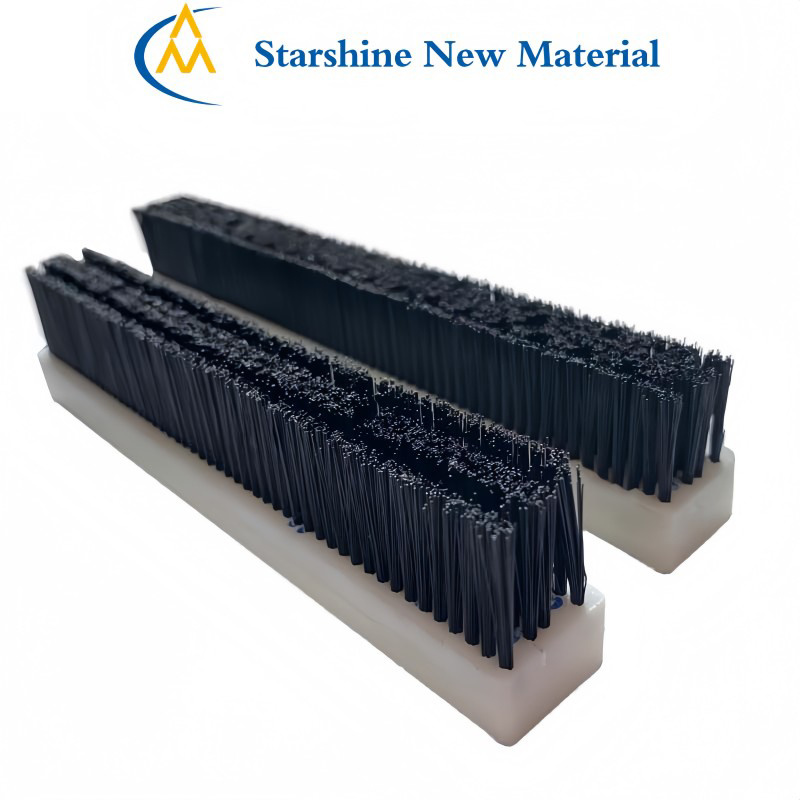
The abrasive filament wheel brush is a wheel-type surface treatment tool with "flexible abrasive filaments" as its core grinding unit. By planting composite filaments attached with abrasive particles onto the wheel base at a specific density, it achieves multiple processing operations such as deburring, oxide scale removal, surface grinding, wire drawing, and precision polishing of workpieces through high-speed rotation. It combines the cutting force of rigid abrasives and the adaptability of flexible brushes, enabling it to easily fit flat surfaces, curved surfaces, edges, and special-shaped structures. This solves the pain points of traditional grinding tools, such as "easy workpiece damage and many processing blind spots", and is widely used in mass production and precision processing links in industries such as automotive, electronics, hardware, and aerospace.
I. Core Product Introduction
The core competitiveness of the abrasive filament wheel brush stems from the composite design of "abrasive particles + flexible base material" — the abrasives provide precise cutting performance, the elasticity of the base filaments ensures uniform grinding pressure, and the wheel structure adapts to the continuous operation needs of automated production lines, achieving the dual goals of "efficient processing + stable quality".
(1) Core Structure and Classification Characteristics
The product is mainly composed of three parts: "abrasive filament unit + wheel base + connecting shaft". According to the abrasive type, base material characteristics, and wheel structure, it can be subdivided into multiple categories to adapt to different processing scenarios.
1. Analysis of Core Components:
- Abrasive Filament Unit: The core is a composite structure of "base filament + abrasive particles + adhesive". The base filaments are made of high-strength nylon (PA66), polyester (PET), or stainless steel wires, with a diameter of 0.15mm-0.8mm; abrasive particles are divided into ordinary abrasives (alumina, silicon carbide, hardness HV1800-HV2200) and superhard abrasives (diamond, cubic boron nitride, hardness HV8000-HV10000) according to hardness, and the grit size can be customized from 40 mesh (coarse grinding) to 2000 mesh (precision polishing); abrasive particles are evenly attached to the surface of the base filaments through high-temperature hot-melt or resin bonding processes, with an adhesion strength of ≥5N per filament, avoiding particle detachment and workpiece contamination during processing.
- Wheel Base: Made of engineering plastic, aluminum alloy, or steel plate, with an adjustable diameter of 50mm-500mm and a wheel thickness of 10mm-100mm. Filaments are planted on the surface in a spiral or radial pattern, with a planting density of 50-200 filaments/cm², ensuring uniform force and no vibration during grinding.
- Connecting Shaft: Equipped with standardized inner hole or external thread interfaces, suitable for CNC lathes, robotic arms, sanders, and other equipment. The applicable rotational speed range is 500-5000rpm, meeting different processing efficiency requirements.
2. Main Product Classification:
- Classified by Abrasive Type: Alumina filament wheel brush (suitable for ordinary metals such as carbon steel and aluminum alloy, cost-effective); silicon carbide filament wheel brush (suitable for medium and high-hardness materials such as stainless steel and stone, with 30% higher wear resistance); diamond filament wheel brush (suitable for superhard materials such as ceramics, glass, and cemented carbide, with outstanding precision polishing effect).
- Classified by Base Material Type: Nylon abrasive filament wheel brush (good flexibility, suitable for curved surface polishing); stainless steel abrasive filament wheel brush (high rigidity, suitable for stubborn burr removal); high-temperature resistant filament wheel brush (temperature resistance above 200℃, suitable for workpiece processing after hot working).
- Classified by Wheel Structure: Flat filament wheel brush (suitable for flat and end surface processing); bowl-shaped filament wheel brush (suitable for inner hole and edge grinding); conical filament wheel brush (suitable for special-shaped curved surface and thread processing).
(2) Core Performance Advantages
1. Flexible Grinding, No Secondary Damage: The elastic recovery rate of abrasive filaments is over 85%. During grinding, they can deform adaptively with the workpiece contour, and the pressure is uniformly controllable (0.1-0.5MPa). It can not only remove tiny burrs (minimum 0.02mm level) but also avoid scratches on the workpiece surface. The surface roughness Ra value after processing can be stably controlled between 0.2-1.6μm.
2. Efficient and Wear-Resistant, Reducing Costs: The service life of superhard abrasive filaments is 5-8 times that of ordinary
- Commodity name: Abrasive Filament Wheel Brush
- Description
-
Abrasive Filament Wheel Brush: Product Introduction and Applications of a Specialized Tool for Efficient Grinding and Polishing
The abrasive filament wheel brush is a wheel-type surface treatment tool with "flexible abrasive filaments" as its core grinding unit. By planting composite filaments attached with abrasive particles onto the wheel base at a specific density, it achieves multiple processing operations such as deburring, oxide scale removal, surface grinding, wire drawing, and precision polishing of workpieces through high-speed rotation. It combines the cutting force of rigid abrasives and the adaptability of flexible brushes, enabling it to easily fit flat surfaces, curved surfaces, edges, and special-shaped structures. This solves the pain points of traditional grinding tools, such as "easy workpiece damage and many processing blind spots", and is widely used in mass production and precision processing links in industries such as automotive, electronics, hardware, and aerospace.I. Core Product Introduction
The core competitiveness of the abrasive filament wheel brush stems from the composite design of "abrasive particles + flexible base material" — the abrasives provide precise cutting performance, the elasticity of the base filaments ensures uniform grinding pressure, and the wheel structure adapts to the continuous operation needs of automated production lines, achieving the dual goals of "efficient processing + stable quality".(1) Core Structure and Classification Characteristics
The product is mainly composed of three parts: "abrasive filament unit + wheel base + connecting shaft". According to the abrasive type, base material characteristics, and wheel structure, it can be subdivided into multiple categories to adapt to different processing scenarios.1. Analysis of Core Components:Abrasive Filament Unit: The core is a composite structure of "base filament + abrasive particles + adhesive". The base filaments are made of high-strength nylon (PA66), polyester (PET), or stainless steel wires, with a diameter of 0.15mm-0.8mm; abrasive particles are divided into ordinary abrasives (alumina, silicon carbide, hardness HV1800-HV2200) and superhard abrasives (diamond, cubic boron nitride, hardness HV8000-HV10000) according to hardness, and the grit size can be customized from 40 mesh (coarse grinding) to 2000 mesh (precision polishing); abrasive particles are evenly attached to the surface of the base filaments through high-temperature hot-melt or resin bonding processes, with an adhesion strength of ≥5N per filament, avoiding particle detachment and workpiece contamination during processing.Wheel Base: Made of engineering plastic, aluminum alloy, or steel plate, with an adjustable diameter of 50mm-500mm and a wheel thickness of 10mm-100mm. Filaments are planted on the surface in a spiral or radial pattern, with a planting density of 50-200 filaments/cm², ensuring uniform force and no vibration during grinding.Connecting Shaft: Equipped with standardized inner hole or external thread interfaces, suitable for CNC lathes, robotic arms, sanders, and other equipment. The applicable rotational speed range is 500-5000rpm, meeting different processing efficiency requirements.2. Main Product Classification:Classified by Abrasive Type: Alumina filament wheel brush (suitable for ordinary metals such as carbon steel and aluminum alloy, cost-effective); silicon carbide filament wheel brush (suitable for medium and high-hardness materials such as stainless steel and stone, with 30% higher wear resistance); diamond filament wheel brush (suitable for superhard materials such as ceramics, glass, and cemented carbide, with outstanding precision polishing effect).Classified by Base Material Type: Nylon abrasive filament wheel brush (good flexibility, suitable for curved surface polishing); stainless steel abrasive filament wheel brush (high rigidity, suitable for stubborn burr removal); high-temperature resistant filament wheel brush (temperature resistance above 200℃, suitable for workpiece processing after hot working).Classified by Wheel Structure: Flat filament wheel brush (suitable for flat and end surface processing); bowl-shaped filament wheel brush (suitable for inner hole and edge grinding); conical filament wheel brush (suitable for special-shaped curved surface and thread processing).(2) Core Performance Advantages
1. Flexible Grinding, No Secondary Damage: The elastic recovery rate of abrasive filaments is over 85%. During grinding, they can deform adaptively with the workpiece contour, and the pressure is uniformly controllable (0.1-0.5MPa). It can not only remove tiny burrs (minimum 0.02mm level) but also avoid scratches on the workpiece surface. The surface roughness Ra value after processing can be stably controlled between 0.2-1.6μm.2. Efficient and Wear-Resistant, Reducing Costs: The service life of superhard abrasive filaments is 5-8 times that of ordinary steel wire brushes. A single Φ200mm diamond filament wheel brush can continuously process more than 10,000 precision workpieces; the grinding efficiency is 10-20 times higher than manual work, adapting to the rhythm requirements of mass production lines.3. Full-Scenario Adaptation, No Processing Blind Spots: The wheel diameter and abrasive grit size can be flexibly customized, adapting to the surface treatment of micro-holes (Φ3mm) of small electronic components to large steel structures, as well as flat wire drawing and curved surface polishing; bowl-shaped and conical structures can penetrate into narrow spaces such as workpiece grooves and steps, solving the problem that traditional grinding wheels are "unreachable".4. Environmentally Friendly and Clean, Adapting to Strict Working Conditions: There is no dust flying during the grinding process (abrasive particles and workpiece chips are easy to collect). The abrasive filaments have stable chemical properties and no pungent odor, complying with the VOCs emission standards of the automotive industry and the clean production requirements of the electronics industry; some models are oil-resistant and weak acid-alkali resistant, adapting to complex environments such as chemical industry and marine engineering.II. Core Application Scenarios
With "efficient adaptation + controllable quality" as the core, the abrasive filament wheel brush covers the entire processing process from blank processing to finished product finishing, and has formed irreplaceable application value in multiple industries.(1) Automotive and New Energy Vehicle Industry
1. Component Deburring: For burrs on the edge of oil holes of engine crankshafts and camshafts, silicon carbide abrasive filament wheel brushes are used with robotic arms for high-speed grinding, achieving a 100% deburring rate; for laser weld burrs on new energy vehicle battery trays, nylon-based abrasive filament wheel brushes are used for cleaning to avoid damaging the tray base.2. Surface Precision Polishing and Wire Drawing: For surface scratch repair of automotive aluminum alloy wheel hubs, 1500-mesh alumina filament wheel brushes are used for fine polishing to restore the mirror effect; for wire drawing processing of stainless steel decorative strips in cars, spiral-planted abrasive filament wheel brushes are used to form uniform straight textures.3. Motor Component Processing: For the oxide layer on the surface of silicon steel sheets of drive motor stators and rotors, fine-grit abrasive filament wheel brushes are used for removal to improve electrical conductivity; for die-casting flash on motor housings, coarse-grit filament wheel brushes are used for rapid removal to prepare for subsequent painting.(2) 3C Electronics and Precision Manufacturing Industry
1. Mobile Phones and Digital Products: For CNC machining tool marks on aluminum alloy mobile phone middle frames, diamond abrasive filament wheel brushes are used for low-speed precision grinding, reducing the Ra value to below 0.4μm; for edge burrs on tablet computer housings, miniature bowl-shaped filament wheel brushes are used for precise cleaning to ensure a smooth hand feel.2. Semiconductors and Electronic Components: For the oxide layer on the pin surface of semiconductor chip packaging bases, 2000-mesh ultra-fine abrasive filament wheel brushes are used for light grinding to improve welding reliability; for burrs in the via holes of PCB circuit boards, fine-diameter abrasive filament wheel brushes are used for cleaning to avoid short-circuit risks.3. Precision Molds: For surface polishing of injection mold cavities, conical abrasive filament wheel brushes are used to grind deep into narrow grooves to ensure mold precision; for burrs on the cutting edge of stamping molds, stainless steel-based abrasive filament wheel brushes are used for trimming to extend the mold service life.(3) Hardware, Building Materials and General Machinery Industry
1. Hardware Tools and Accessories: For forging oxide scale on wrenches and screwdrivers, coarse-grit alumina filament wheel brushes are used for rapid removal; for thread burrs at the joints of stainless steel pipes, custom thread-type abrasive filament wheel brushes are used for cleaning to ensure smooth connection.2. Building Materials and Decoration Materials: For surface wire drawing of aluminum alloy door and window profiles, wide flat abrasive filament wheel brushes are used for mass processing; for scratch repair of marble and quartz stone countertops, diamond filament wheel brushes are used for light grinding to restore the stone luster.3. General Machinery Components: For inner hole burrs of bearing seats and oil passage burrs of hydraulic valve blocks, bowl-shaped or cylindrical abrasive filament wheel brushes are used for targeted processing to improve component assembly precision and service life.(4) Aerospace and High-End Equipment Industry
1. Aerospace Components: For forging burrs on titanium alloy aircraft landing gears, superhard abrasive filament wheel brushes are used for removal to avoid damaging the high-strength base; for edge trimming of air film holes of aero-engine blades, miniature abrasive filament wheel brushes are used for precision trimming to ensure the precision of air film holes.2. High-End Instruments: For aluminum surface polishing of optical instrument lens barrels, ultra-fine diamond filament wheel brushes are used for processing to ensure no glare on the surface; for surface treatment of stainless steel surgical instruments in medical equipment, medical-grade abrasive filament wheel brushes are used for grinding to meet hygiene standards.III. Selection and Usage Guide
1. Abrasive Selection: Choose alumina/silicon carbide for deburring ordinary metals, diamond for precision polishing of superhard materials, and nylon-based abrasive filaments for non-metallic materials;2. Grit Matching: Choose 40-120 mesh for coarse grinding and deburring, 240-800 mesh for grinding and finishing, and 1000-2000 mesh for precision polishing;3. Rotational Speed Control: For metal processing, 1500-3000rpm is recommended; for precision electronic component processing, 500-1500rpm is recommended to avoid excessive abrasive wear caused by high speed;4. Maintenance Points: Timely clean the residual debris between the abrasive filaments after use, regularly check the wear condition of the filament wheel, and replace it in time when the length loss of the abrasive filaments exceeds 30%.
Message
Please provide the following valid information, and we will contact you as soon as possible.
Mobile:
Wechat/Whatsapp:
E-mail:
Address:
No. 123 Yuantan Avenue, Yuantan Town, Anqing City, Anhui Province, China


Online Message
If you have any product related questions, please feel free to contact us!
Copyright © 2025 Starshine New Materials Technology Co., Ltd.
Business License